
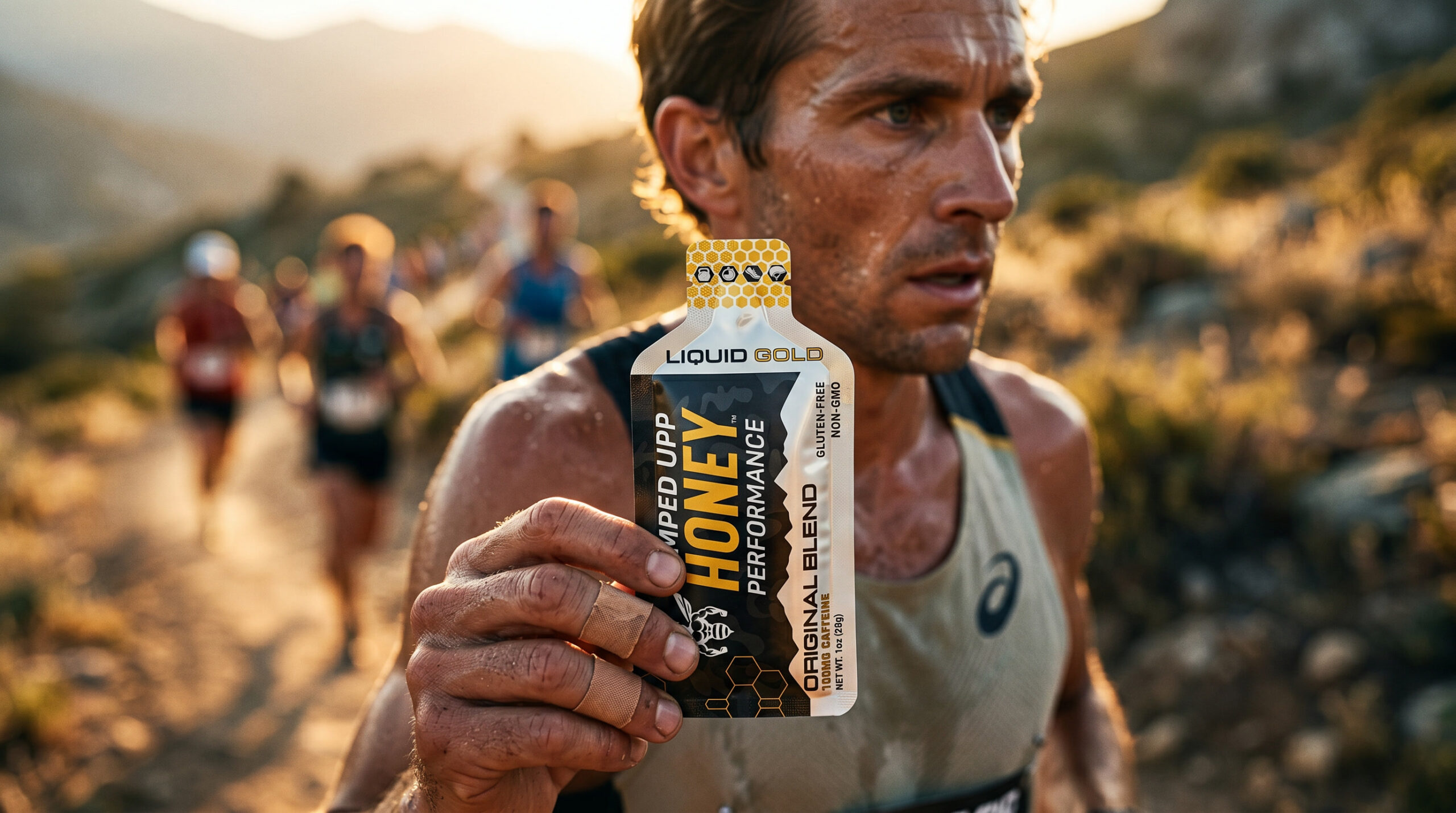
Mile eighteen. Your legs are still moving, but the effort has shifted. Each step costs more than it did an hour ago. The easy rhythm from the first hour now requires attention, and you are calculating how many miles remain the way you would calculate change in your pocket.
This is where long runs are shaped, not just by talent or mileage, but by how well you prepared before you ever laced up your shoes.
Fueling is a large part of that preparation, and it is also one of the most overlooked variables among runners who are otherwise meticulous about their training. Getting your energy right for a long run requires a different approach than what works for a quick 5K shakeout.
Amped Upp Honey, an all-natural pre-workout made with organic raw honey and green tea caffeine, gives runners a portable, real-ingredient option they can build into their long-run routine with intention and flexibility.
Why Long Runs Need a Different Fueling Plan
Short runs generally do not require much thought around pre-run fuel. If you have eaten reasonably in the hours before, your body may have enough available energy to carry you through forty-five minutes without much extra planning.
Long runs place different demands on energy availability, hydration, and pacing.
Once you are running for ninety minutes or more, your body is drawing on a broader set of energy sources, managing heat, and beginning to feel the cumulative cost of sustained effort. The decisions you make before the run, and sometimes during it, can influence how the later miles feel and how well you recover afterward.
Runners preparing for 10Ks, half-marathons, marathons, trail races, and other longer efforts benefit from treating long-run fueling as a practice in itself. That means having a pre-run fuel strategy, understanding when mid-run fuel may support your effort, and testing both during training instead of guessing on race day.
Where Amped Upp Honey Fits Before the Run
Amped Upp Honey is designed to be taken before training, and for most runners, one single-serve packet before the run is the starting point.
The product’s organic raw honey provides fast-digesting carbohydrates that your body can put to use quickly, while the green tea caffeine supports energy and alertness. Many runners describe a strong, clear lift in energy and focus that feels controlled rather than scattered.
The timing of your pre-run packet matters. Follow Amped Upp Honey’s general pre-workout timing guidance, and avoid eating a heavy meal immediately before heading out, especially on long-run mornings.
Many runners find that keeping pre-run food light and using Amped Upp Honey as their energy primer works well for early starts, when a full breakfast feels impractical but heading out empty is not appealing either.
The single-serve packet format makes this practical in a way that larger tubs or mixed drinks are not. You can take it with water at home, in the car on the way to a trailhead, or near the start line before a tune-up race.
There is no measuring, no shaker bottle, and nothing to prepare the night before. Humanity may yet recover from the tyranny of sticky scoops.
For many runners doing runs in the ninety-minute to two-hour range, one pre-run packet may cover what they need from a fuel-and-energy standpoint, provided they are also managing hydration and eating appropriately throughout the day and the evening before.
When to Carry an Extra Packet During the Run
As runs extend past two hours, some runners may find it useful to carry a second packet and take it during the run.
This is not a universal rule. It depends on the runner, the effort level, the conditions, and what else they are carrying. For marathon and trail runners logging runs that push into the two-and-a-half to four-hour range, having the option available is worth considering.
A common point to take a mid-run packet is at a water stop, a planned walk break, or a moment when the effort begins to extend and your attention shifts toward managing output. Taking it with water can help make the packet easier to use comfortably.
Because each packet is compact and lightweight, it fits easily in a running vest pocket, shorts pocket, or small handheld carrier without adding meaningful weight.
If you run with a hydration vest, Amped Upp Honey packets are easy to tuck into a front pocket alongside your phone and keys. For runners using a race belt or shorts with small pockets, a single folded packet fits cleanly alongside other run-day essentials.
How to Pair It with Water and Electrolytes
Amped Upp Honey is a fuel and energy source, not a hydration product or electrolyte replacement. It complements, not replaces, your broader fueling plan.
Take your pre-run packet with water rather than dry. During long runs, continue drinking according to your thirst, conditions, and normal routine. Do not rely on the product to manage hydration for you.
If you typically use electrolyte tabs, a sports drink, or salted snacks during runs over two hours, keep that plan in place. Amped Upp Honey fits into an existing long-run strategy. It does not replace the other components that help you manage heat, sweat loss, and overall comfort.
For runners doing very long trail runs or hot-weather efforts, electrolyte management remains a separate consideration. Think of Amped Upp Honey as handling the energy and alertness piece while your hydration strategy handles the rest.
Some runners also carry real food on long runs, such as dates, banana pieces, or small rice cakes. Combining a mid-run packet with a bite of whole food and water at a designated stop can work well for some athletes, especially during longer efforts where one source of fuel is rarely the whole plan.
How to Test Timing Before Race Day
The most important rule for any long-run fuel is to test it during training, not for the first time on race day.
Amped Upp Honey is made with recognizable ingredients, but individual runners respond differently to caffeine timing, eating close to sustained effort, and taking in fuel mid-run. That is not a reason to avoid testing. It is a reason to test before the race matters.
Start by using one pre-run packet on a training long run at the same time of day and with the same general pre-run routine you plan to use on race day.
Pay attention to how you feel in the first thirty minutes, how your energy and alertness hold through the middle miles, and how the final portion of the run feels compared with runs where you did not use it.
If you plan to carry a second packet for race day, practice that during training as well. Take it at the same kind of point in the run where you would take it during the race. Notice how your stomach responds, how the energy lands at that stage of the effort, and whether the timing feels right for you personally.
Most runners building their long-run fueling routine from scratch may start with PRE6-WORKOUT™ Original Blend. Runners who already train with PRE7-WORKOUT™ CAS Boost can continue using it on long runs if they have tested the timing during training.
Either way, training runs are where you figure out what works. Race morning should confirm the plan, not become the experiment.
Common Long-Run Fueling Mistakes to Avoid
• Skipping pre-run fuel entirely. Heading out on a two-hour run completely fasted works for some runners in specific contexts, but many runners preparing for long training efforts or race-prep runs benefit from starting with some available energy. That can support steadier effort across the run.
• Waiting too long to practice your fueling plan. Use long training runs to learn how Amped Upp Honey fits your timing, hydration, and pace. By race day, the goal is to follow a routine you already trust.
• Forgetting water. Taking a honey-based product without water, especially mid-run, can be uncomfortable. Pair it with adequate fluid.
• Overcomplicating the plan. Runners who try to manage too many products at once can end up confused about what is working and what is not. A simpler plan executed consistently is more useful than an elaborate one that changes every week.
• Saving mid-run fueling practice for the final week. If you are training for a marathon or trail race and plan to carry fuel during the event, start practicing mid-run fueling several weeks out. Your routine becomes easier to trust when it has already supported real training.
How to Keep Your Long-Run Routine Simple
The runners who fuel best on long efforts are usually not the ones with the most elaborate systems. They are the ones who have figured out a simple, repeatable approach and stuck with it long enough to trust it.
Amped Upp Honey fits this model.
Take one packet before the run with water at your standard pre-run time. For runs that extend significantly, carry a second packet as an option and use it when the effort calls for it. Manage water and electrolytes separately as you normally would.
Single-serve packets make the routine portable and consistent whether you are running from home, driving to a trail, or standing at a race start. That portability is part of the value. It removes a prep step that does not need to exist.
Start Testing on Your Next Long Run
If your long runs have been feeling harder to finish than they should, or if you have been heading out without much thought about pre-run fuel, your next long training run is a reasonable place to start building a better habit.
Try Amped Upp Honey as your pre-run fuel. Pay attention to how the run feels from mile one through the final stretch. If you are training for a race with runs pushing past two hours, consider carrying an extra packet as a mid-run option during longer sessions.
The goal is to arrive at your race with a fueling plan you have already tested, refined, and trust.
Stock up for your next training block at ampedupphoney.com and keep a few packets in your run bag so they are ready when the long runs are.