

In most organizations, conversations are what gets work done: ideas are ignited in messages, decisions are made in meetings, and updates travel across departments. But far too often, these conversations get lost in tools, buried in inboxes, and forgotten in the infinite scroll of chat. When teams have challenges recalling or referencing conversations, projects stall, accountability falters, and employees recycle conversations without progress. To combat this, organizations are using digital platforms that intentionally structure communication that is searchable and linked to execution. project management tools now offer a landscape where teams can embed conversations directly into workflows, ensuring that conversations are not just shared but retained, organized, and serve as an action plan.
Lark Messenger: making conversations work harder
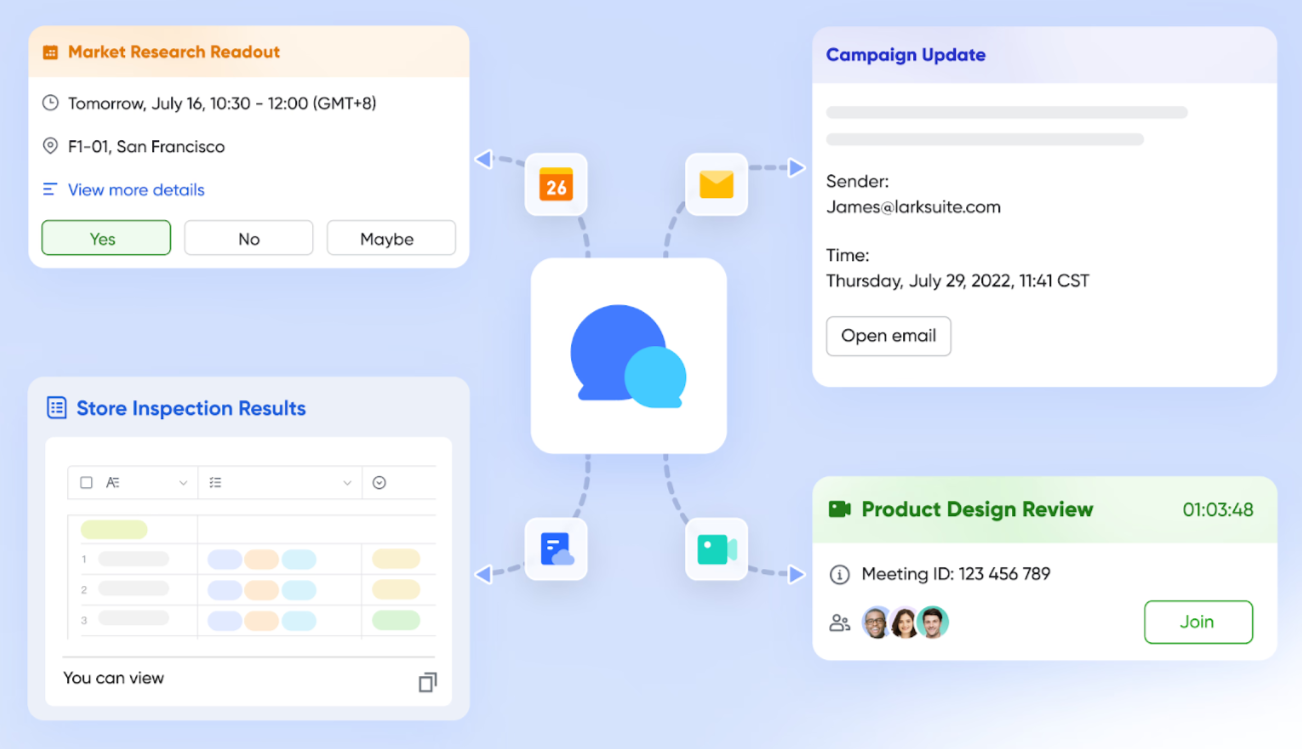
Most teams rely on chat platforms, but without structure, they quickly devolve into noise. Lark Messenger changes this by embedding order and context into everyday communication. Conversations are threaded, so discussions on specific projects or topics remain easy to follow. Important updates can be pinned, ensuring they don’t vanish in the stream. Buzz notifications ensure urgent issues cut through instantly without overwhelming employees with constant alerts. Most importantly, Messenger links directly to tasks, Docs, or calendar events, which means conversations seamlessly transform into action. Instead of being scattered messages that fade over time, discussions stay anchored to execution, creating both clarity and accountability.
Lark Calendar: linking communication with time

Conversations often lose their relevance when they are pulled from schedules. Lark Calendar brings communication into focus by making time-based updates visible and accessible. Shared calendars provide department interaction that limits the number of back-and-forth messages just to schedule a meeting. Reminders can include linked documents or agendas so employees are prepped before every meeting. For global teams, time-zone awareness prevents misunderstandings and ensures no one is always burdened with inconvenient time slots. Events can also connect to Docs, Base, or Messenger threads, making every conversation referenced to a meeting saved in context. Conversations won’t just slip away, they will stay connected to the timeline of the project.
Lark Base: conversations rooted in accountability

When projects involve multiple teams, conversations can easily scatter into silos where ownership is unclear. Lark Base solves this by linking discussions to structured records of milestones, deliverables, and responsibilities. Teams can view progress through dashboards, timelines, or kanban boards, keeping updates transparent across the organization. Automations keep project status current, reducing the need for repetitive “check-in” meetings. By tying customer pipelines to internal deliverables, it can also support the features of a CRM app that ensure client needs are tracked alongside execution. In that way, important details aren’t buried in emails but stay connected to measurable outcomes.
Lark Docs: turning feedback into visible progress
Documents are a common second place for critical discussions–through endless versions or separate commenting threads. Lark Docs solves this problem by providing a single living document to capture the discussions and edits collaboratively in real-time. Commenting inline keeps the comment tied to something specific to give the context. Version history ensures that the discussion and evolution of each idea is recorded and decisions made are evident for all to see. Embedded Sheets allow live data to be part of the same space and address accurate numbers. By connecting Docs with the tasks or approvals, the engagement changes feedback from more of a passive commentary to an active step on feedback. Discussions in Docs do not get buried . They become part of the record as part of the intentionality to document all aspects of the process for transparent outcomes.
Lark Minutes: preserving the substance of discussions

Meetings are where some of the most important conversations happen, but without documentation, those conversations lose their value. Lark Minutes solves this issue by recording, transcribing, and summarizing meetings automatically. Employees who miss a meeting can read the summary instead of asking to meet again, and, employees who attended the meeting can read the transcript to check on details. Minutes automatically extracts action items and links them to tasks, confirming that agreements transform into performance. By generating searchable archives of the conversation, Minutes ensures meetings will be a resource, rather than a memory. For distributed teams, this is a considerable change, turning meetings into real assets that continue to add their weight as they support progress.
Lark Approval: clarity in decision-related conversations

Approval processes frequently produce unnecessary delay due to poor information, clarity, and accountability in requests. Lark Approval has reduced these unnecessary delays by formalizing the structure under to which conversations about decisions take place, and providing teams with the ability to communicate about decisions. Lark Approval submits requests via standardized forms that request the necessary information up-front and prevent time-consuming clarification messages. Requests are routed automatically so that they reach the right stakeholders as quickly as possible, and with the notifications in Messenger, once a decision is pending, it is visible and on the pending list. Every approval is documented, so it is clear who decided what and when. Lark Approval formalizes these processes in an automated workflow so that conversations related to decisions are both visible and efficient, allowing teams to act with confidence.
Lark Mail: keeping external and internal conversations aligned

Talking to people outside the company, like customers or partners, can be a pain since it’s usually separate from what we do inside. Lark Mail fixes this by putting those outside messages right into the systems we use every day. Shared inboxes let everyone see customer chats, so we don’t miss anything. You can link messages to Docs, Base, or Tasks to keep track of what customers want and make sure we take care of it. Plus, it’s easy to find old emails, and we can control who sees what to keep private stuff safe. Instead of keeping outside talks separate, they become part of how we work together inside the company.
Lark Sheets: conversations guided by live data

Data often sparks critical conversations, but if numbers are scattered across spreadsheets, they lack transparency. Lark Sheets creates clarity by keeping data live, shared, and tied to workflows. Teams can collaborate in one sheet, making contributions and edits visible in real time. Conditional formatting highlights anomalies that prompt necessary discussions, while permissions make ownership explicit. Because Sheets can be embedded in Docs or dashboards, the data is never separated from context. Notifications tied to changes keep stakeholders updated, ensuring conversations are based on accurate numbers. In this way, Sheets turns data-driven communication into a transparent, continuous process.
Conclusion
Conversations are key to working together, but they’re only helpful if you can find them later. Tools like Lark are changing how companies handle this. Messenger keeps chats in one place, Calendar links talks to schedules, Base makes sure everyone’s on the same page, Docs turns comments into real changes, Minutes saves what was decided in meetings, Approval organizes decision-making chats, Mail keeps everyone aligned inside and outside the company, and Sheets makes sure data discussions are spot-on.
With these features, talks don’t just vanish into thin air. They are easy to find and use. By putting communication into one linked system, Lark helps teams go quicker, work together better, and not waste time with the same talks over and over. Today, keeping talks arranged isn’t just about saving time—it’s about being open and on the same wavelength, which is what helps groups grow.