
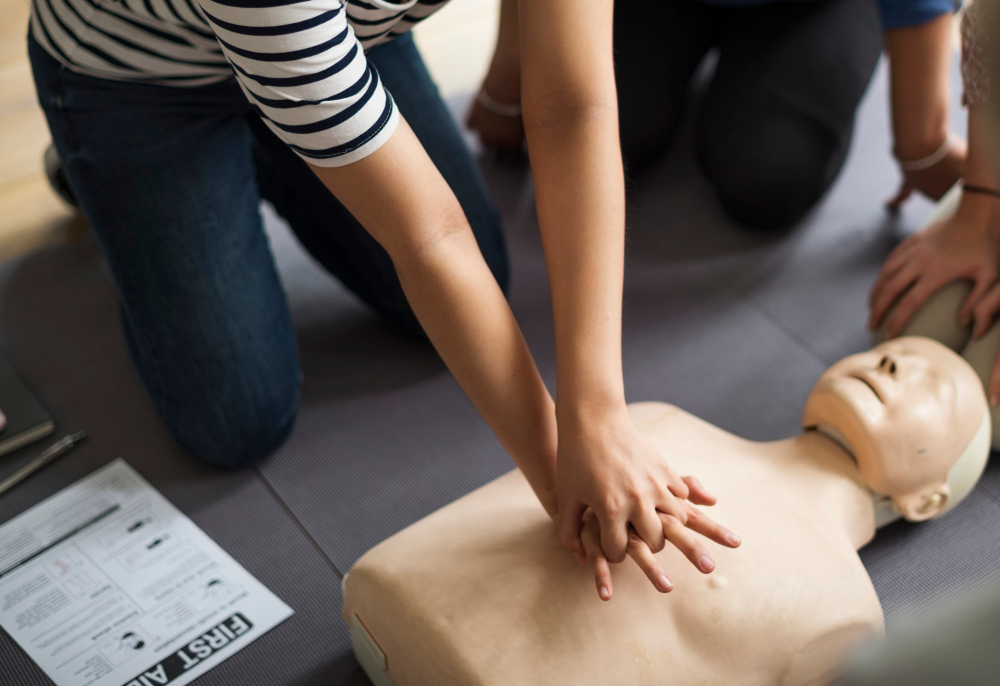
First aid training is the immediate care given to an injured or ill person before professional medical help arrives. By learning skills like CPR and wound management, you can stabilize a patient, prevent conditions from worsening, and significantly increase their chances of survival during a critical health emergency.
Why Should You Care About First Aid?
Most of us think an emergency won’t happen to us. Then, one day, you’re at the gym or a family dinner, and someone collapses. It’s a terrifying moment if you don’t know what to do. Taking a course with C2C First Aid turns that panic into a plan of action.
The reality is that emergency responders can take several minutes to arrive. In cases of cardiac arrest, every second counts. If you can step in and start chest compressions immediately, you aren’t just “helping”—you’re literally keeping blood flowing to the brain. It’s the difference between a tragedy and a recovery story.
What is Blended Learning?
We all have busy lives, right? Sitting in a classroom for two full days can be a tough sell. That is where blended learning comes in. It lets you do all the “book work” or theory online at your own pace.
Once you’ve finished the digital modules, you just pop into a local facility for a few hours to practice the hands-on skills with an instructor. You get to push on the mannequins, practice with an AED, and get real-time feedback. It’s efficient, WSIB-approved, and honestly, a lot more fun than staring at a whiteboard all day.
How Do You Keep Your Skills Sharp?
Skills fade. It’s a simple fact. If you haven’t practiced a bandage wrap or a Heimlich maneuver in three years, you’re going to hesitate when it matters. That’s why certifications usually expire after three years.
I always tell people to treat it like a software update for your brain. You aren’t just getting a card for your boss; you’re making sure that if your kid or a coworker stops breathing, your hands know exactly what to do without you having to overthink it.
Is CPR Hard to Learn?
Not at all. Modern CPR training has been simplified to make it easier for the average person to remember. You don’t need a medical degree to save a life. The focus is now on high-quality chest compressions and using an Automated External Defibrillator (AED).
AEDs are amazing pieces of tech. They actually talk to you and tell you exactly what to do. In a training course, you’ll get to play with a trainer unit so you aren’t scared of the real thing. Once you see how it works, the “fear factor” pretty much disappears.
If you are looking for first aid training near Gore Park, the corner of King and Hughson, or other areas close to our facility in the downtown core, then you may reach out to Coast2Coast First Aid/CPR in that area. For more info and articles like this visit our official website.
Frequently Asked Questions
1. How long does a standard first aid certificate last? In Canada, most certificates from major providers like the Red Cross are valid for three years. However, some workplaces require you to refresh your CPR skills every year.
2. Can I get in trouble if I perform CPR and it doesn’t work? In most places, “Good Samaritan” laws protect people who are trying to help in an emergency. As long as you act reasonably and don’t do anything wild, you are legally protected.
3. What is the difference between CPR Level C and BLS? Level C is for the general public and covers adults, children, and infants. BLS (Basic Life Support) is specifically for healthcare professionals like nurses, paramedics, or dentists.
4. Is the online portion of the course mandatory? Yes, if you choose the blended format, you must finish the online theory before you show up for your in-class skills session. It ensures everyone is on the same page.
5. Do I need to be physically fit to take the course? You do need to be able to get on the floor to practice on the mannequins. If you have physical limitations, just let the instructor know—they can usually find ways to accommodate you!