
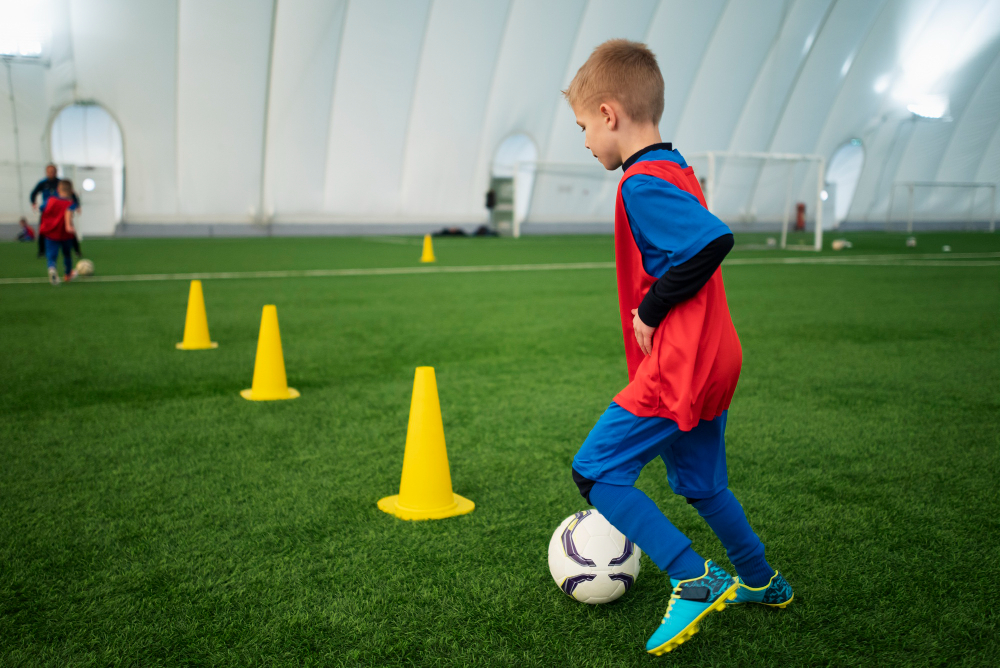
It introduces children to soccer at the age of 5 in a less strict training-like way and more in terms of imagination, confidence, and movement. The best soccer drills for 5-year-olds are training disguised as games, those that make them touch the ball, giggle, and learn without ever realizing it’s work.
At this age, their short attention spans, coordination development, and reaction to positive reinforcement. Therefore, your aim as a parent or coach should be: maintain maximum ball contact, keep waiting time to a minimum, and add variety and surprise. What follows are entertaining, functional drills (and mini-games) you can use to make each session enjoyable and productive.
Why “Fun” Matters More Than Technique At Age 5
Before proceeding to drills, here’s why you should ground everything in playfulness:
Attention spans are tiny. Kids this age lose interest quickly if forced to line up, wait, or do repetitive, dry drills. Many youth coaches advise avoiding long lines or lectures.
Confidence is fragile. Small successes—dribbling past a cone, making a pass into an open space—go a long way in building belief.
Motor skills + creativity over structure. At age 5, you’re developing balance, spatial awareness, coordination—not perfect technique.
Repetition with game variation. The more they touch, the better. But nestle the repetition within a play game.
The secret is to combine skill, confidence, and enjoyment in your drills.
Sample Structure for a 30- to 40-Minute Session
Here’s a rough template you can use; adjust by energy level and group size:
| Segment | Duration | Purpose |
| Warm-up / welcome | 5 min | Loosen up, get them smiling |
| Skill games / drills | 15–20 min | Focus on dribbling, passing, footwork |
| Mini game / scrimmage | 8–10 min | Let them apply in play context |
| Cool-down / talk | 3–5 min | Stretch, cheer, highlight wins |
In each phase aim to rotate through drills every 5–7 minutes so boredom doesn’t set in.
6 Fun & Effective Soccer Drills for 5-Year-Olds
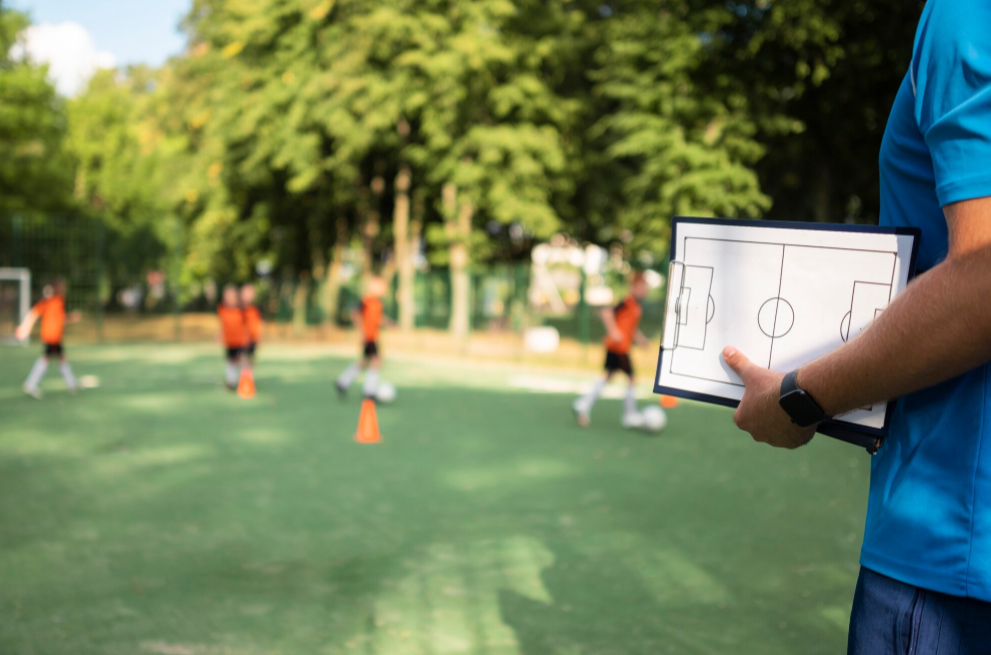
Here are six engaging drills you can add to your session –
1. Red Light / Green Light (Dribble Freeze)
What it does: Provide each with a ball in a small grid. Call “Green Light” — they dribble around freely. Call “Red Light” — they have to stop and trap the ball as soon as possible (perhaps on a foot or sole).
Benefits: Promotes fast responses, control, both-foot play. This is a classic among young soccer players.
Change: Use “Yellow Light” to necessitate slow dribbling, or call “Blue Light” where they dribble with the left foot alone, etc.
2. Sharks & Minnows (Dribbling Game)
What it does: All players are “minnows” dribbling within a rectangular grid. One or two “sharks” stand ball-less in the middle. On “Go,” minnows dribble around while sharks attempt to steal or knock out their ball (in a friendly manner). When a minnow loses a ball, they become a shark or sit out.
Benefits: promotes spatial awareness, shielding, changes of pace, and pressure dribbling. FPRO suggests “Shark Attack” as a nice variation on this.
Tip: Keep it safe and straightforward, no tackles.
3. Gate Passing / Partner Passing Through Cones
What it looks like: Set up cone-pairs (gates) 3–5 yards apart. Children pair up and attempt to pass the ball through the gate. Begin wide, increasingly narrow cones as they get better.
Benefits: Promotes passing with accuracy, communication, and gentle touches. TOCA recommends beginning with inside-of-foot passing at this age.
Variation: Include a rule that every third pass is to be executed using the non-dominant foot.
4. The Goal Hunt (Dribble Through Gates Game)
What it does: Spread out lots of little “goals” (cone gates colored with various colors). Children dribble around, attempting to dribble through as much as possible in a time period. You may give point value to some gates.
Benefits: Provides freedom, variety, and a chance for creativity while maintaining dribbling control. A variation of this exists in soccer drills for 5 year olds structures.
Tip: Change gate locations after every round to keep children moving on different paths.
5. Island Rescue (Dribble & Find Circles)
What it looks like: Spread out little rings or flat hoops (“islands”) across the field. Children dribble independently. At your whistle, they need to dribble to an island and remain within it before time is up. There might not be islands for all to grab—those remaining without receive a fun penalty (a goofy dance or 3 toe taps).
Benefits: Practices dribbling on cue with attention, awareness, and fun pressure. Drill is also suggested in creative soccer drills for this age.
6. Freeze / Stop & Trap
What it looks like: Allow children to dribble around in an area. Every so often you shout “Freeze!” — they have to instantly stop the ball, trap it with a foot, or stamp on it. You shout “Go!” and they begin again.
Advantages: Educates control, quick stops, balance, and reflexes. Used in most novice soccer training schedules as a basic variation.
As kids grow, their soccer sessions naturally get longer and more structured—after all, how long is a soccer game for 13-year-olds is a very different question than when they’re just starting at age five.
Coaching Tips to Keep It Engaging & Safe
- Short directions, big visuals. Use 1–2 sentences and show them. Children this age react more to seeing than hearing long.
- Switch fast. Alternate drills every 5–7 minutes to avoid boredom.
- Praise, never scold. Reward every good touch, attempt, or effort.
- Be active as a coach. Move with them, yell encouragement, provide challenges.
- Employ colorful equipment & sound signals. Cones, hoops, whistles, colored jerseys all bring fun and clarity.
- Be prepared to change. When a drill fails, move on to tag or basic dribble games.
- Make space and safety. Employ proper-sized fields, soft grass or turf, and keep an eye out for collisions.
- Parent participation can work. Having a parent assist in picking up stray balls or cheering children warms the environment.
- Minimize waiting in line. Always ensure all children have a ball or are engaged in movement—waiting lines are the quickest way to lose them at this age.
Why These Drills Work for 5-Year-Olds
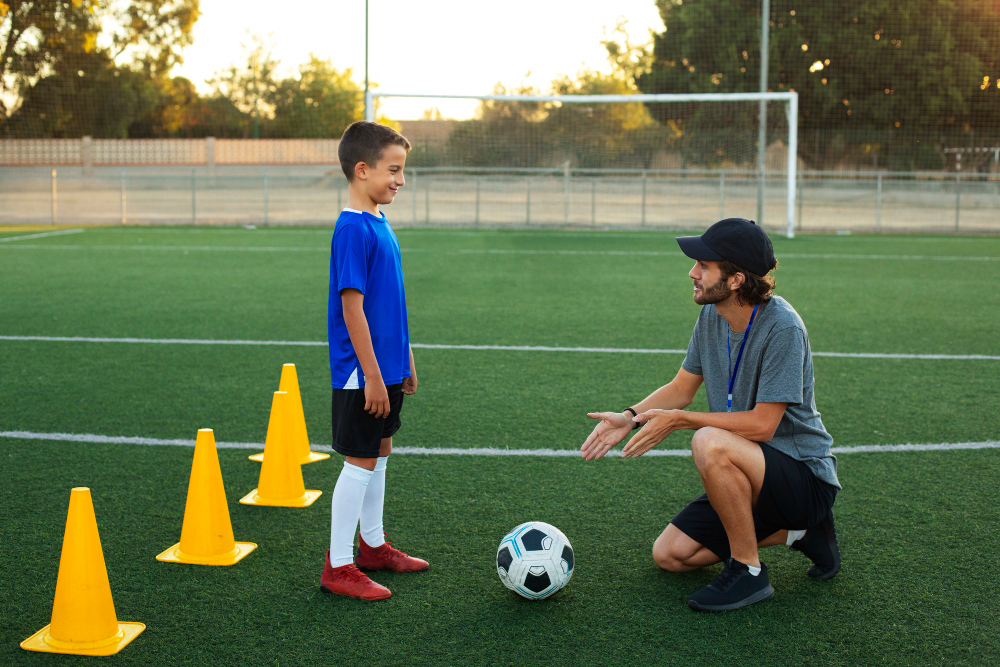
- They provide freedom of creativity, developing inherent enjoyment of the game.
- They develop foundation motor skills such as starting, stopping, turning, balance, and coordination.
- They steer clear of emphasizing technique or rigid structure, which has the potential to result in frustration.
- They learn quickly: change cone placement, alter rules, incorporate surprises—fresh and interesting.
Putting It All Together: Sample Session Plan
Below is an example 35-minute session you can conduct:
- Warm-up (5 min): “Follow the Leader” dribble—coach demonstrates, children replicate dribbling moves (zigzag, side steps, fast, slow).
- Drill Round 1 (7 min): Red Light / Green Light
- Drill Round 2 (7 min): Sharks & Minnows
- Drill Round 3 (7 min): Gate Passing
- Mini Game (6 min): 4 Goals or small-sided 3v3
- Cool-down (3 min): Gentle circling stretching, shout outs: “Who made a good pass?”, “Who dribbled well?”
Also Read: 10 Richest Sports Leagues in the World
Conclusion: Cultivating Love Through Drills
At 5 years old, your role isn’t to make them into future pros in an instant—it’s to get them to love the game, have fun moving, and feel competent with a ball in front of them. The best soccer drills for 5 year olds are fun, varied, short, and encouraging. Use plenty of praise, keep them active, and always finish sessions on a high.
Each child will progress at his own rate. As they enter age 6 and up, you can gradually add in more formal technique drills. But for the time being, just let them be children—running, laughing, chasing, and learning what a soccer ball can do on the ground.