
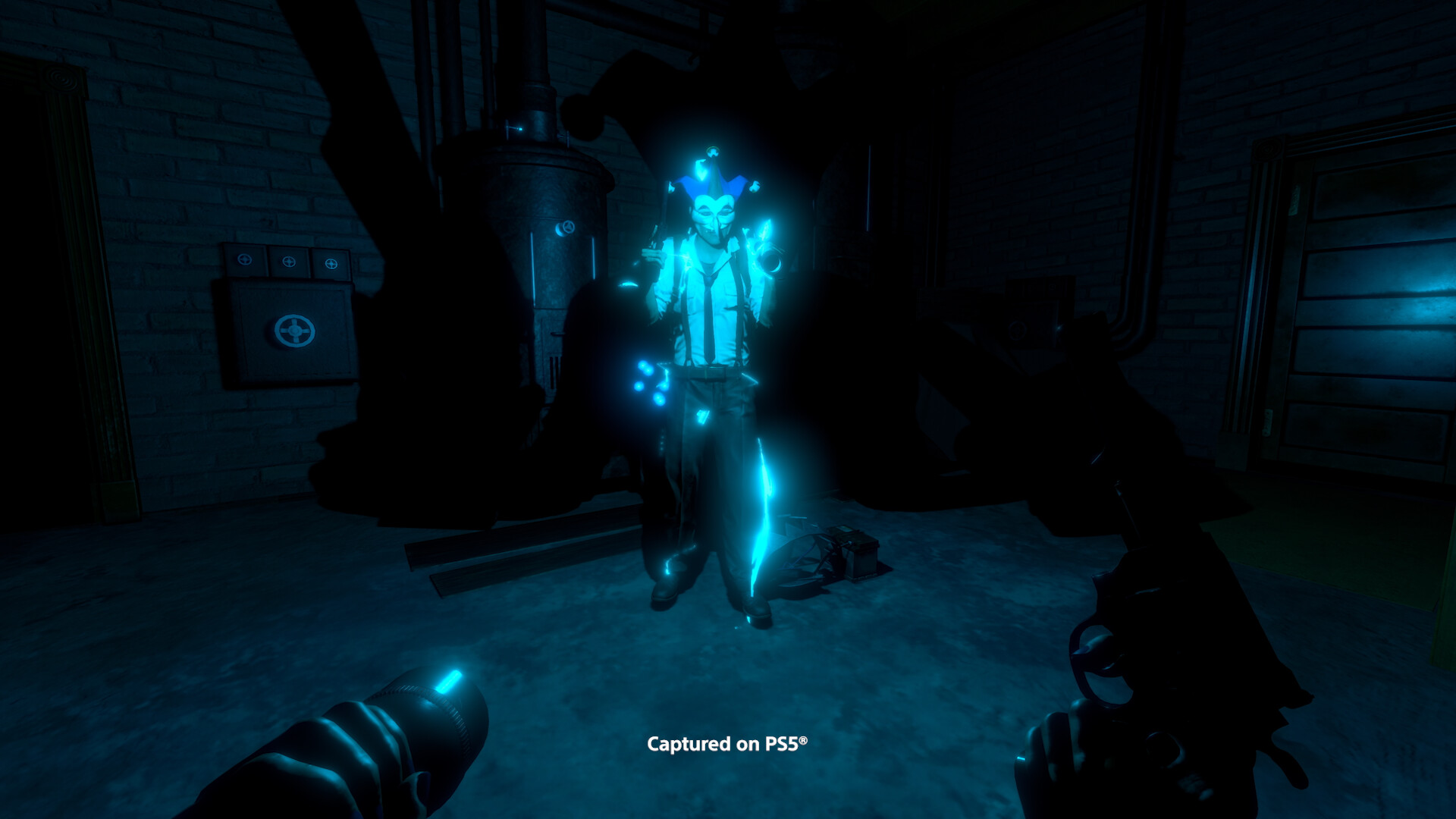
My aim in this guide is to take you through how Midnight Murder Club uses proximity chat to reshape strategy and social play on PS5.
If you’re curious about how voice communication can transform a multiplayer experience, especially in a game where light itself is dangerous, you’ll find this useful even as you pick it up for the first time. Buy Midnight Murder Club on PlayStation 5 for the cheapest prices
What Is Midnight Murder Club on PS5?
Before we dig into voice, let me set the stage for those new to this game.
Midnight Murder Club is a multiplayer shooter where the environment is pitch-black. You and up to five others (six players total) navigate a two-story mansion called Wormwood Manor, armed only with a flashlight and a revolver.
Here’s what makes it special on PS5:
Guest Pass
If one player buys the full version, they can invite up to five friends to join for free. The “Guest Pass” users get full content but can’t host matches.
You can also play with PC users and carry your unlocked items between platforms.
Positional Audio and Proximity Voice
The game is built to use spatial audio so voices echo realistically through rooms. Midnight Murder Club uses detailed positional audio. This is also paired with a strong implementation of proximity chat for immersive sound.
There are multiple modes in the game. Classic modes include Free‑for‑All, Team Deathmatch, Thief in the Night and Headhunters. A Wildcard mode lets you pick “cards” that twist rules mid-match.
You can also use the PvE option, Graveyard Shift, to play alone or cooperatively against AI enemies in special objectives.
Proximity chat design and use
Now let’s dig into the heart of the matter, how proximity chat works in Midnight Murder Club, and why it changes the game.
What Is Proximity Chat?
Proximity chat means your voice is only heard by players who are near you, which depends on:
- the distance
- room layout
- walls
- corridors
In Midnight Murder Club, voices aren’t global. If someone is in the room next door, you might hear muffled whispers or footsteps. If someone is farther, you might only catch faint echoes or nothing at all.
The game combines this with positional audio, so you can often tell where the voice is coming from, based on directionality and echo. When a gunfight breaks out elsewhere, or footsteps occur in the next room, you can track those by listening.
In matches with strangers, there’s also a voice scramble (obfuscation) option so that players not in your party have distorted voices. So, you can’t clearly make out what they say.
Why It Matters
Because the map is dark and visual cues are minimal, sound becomes a foundation of information. Turning on your flashlight lets you see but it also gives away your position. That trade‑off makes voice one of your most powerful tools.
The developers clearly intended this. They paired detailed positional audio with the voice system to make it immersive and tension‑driven.
For example, if I hear a whisper “behind you” in an adjacent corridor, I might pivot slowly or flick on a torch briefly. But if I shout too loudly, I alert anyone nearby. The voice mechanic forces you to choose when to talk.
This design leads to surprising emergent moments of tension and comedic surprise:
- sneaky whispers,
- false lures,
- sudden screams to draw someone out, or
- echoing laughter after a kill.
In short, proximity chat lets you find your way through darkness.
Gameplay and best voice practices
Having played many matches, I’ve seen how voice shifts gameplay drastically. Here’s how proximity chat influences strategy, and how I try to use (or avoid) it.
Bluffing and Misdirection
Because voice transmits only locally, speaking can betray your location. But silence is blind. So I often whisper, “two rooms over” or make a muffled laugh, which is enough to confuse or lure opponents.
Sometimes I catch a rival overheard mumbling, and I turn off my torch and slowly close in. In team modes, coordinating with friends via whispers can help flank or bait enemies. But if you speak too plainly, someone else might overhear you and ambush you.
When to Speak and When to Stay Quiet
I learned over time that less is more. Use short phrases, whispers, or directional cues. Long monologues are risky. If I need to warn a teammate, I’ll do it softly, and then stay silent.
If I’m in a corner hiding, I may stay mute until I hear footsteps near me. In other cases, I might deliberately whisper something to mislead (“I’m upstairs”) and lure someone into a trap.
Also, watch when shots are fired. A gunshot leaves a streak of light and echoes, so voice plus sound often triangulates your location. Shooting wildly becomes dangerous. The voice scramble option may also be helpful when playing with randoms. It preserves the general tone but hides specific words.
Challenges and drawbacks
Even though proximity chat shines in Midnight Murder Club, it also brings challenges.
One common issue is that finding full lobbies can be difficult. The relatively low player count means wait times and partial matches are common. When lobbies are not full, the voice dynamics weaken, and the tension drops. Because voice becomes less effective when fewer people are around, proximity chat’s full potential suffers.
While Wildcard mode adds fun variation, and Graveyard Shift gives a PvE side but some critics find the number of maps and modes limited. Over time, players may want more variety to maintain longevity. Also, the PvE mode is often flagged as weaker than the PvP core.
When I first launched Midnight Murder Club on PS5, I wasn’t sure if voice whispers and echoes would truly matter. After dozens of matches, I can say that proximity chat changes everything. It turns darkness from a gimmick into a psychological battlefield.
For gamers new to the concept, don’t expect mastery overnight. Learn to listen, choose when to speak, and experiment with whispers. The more you play, the more you begin to “hear” the map.