
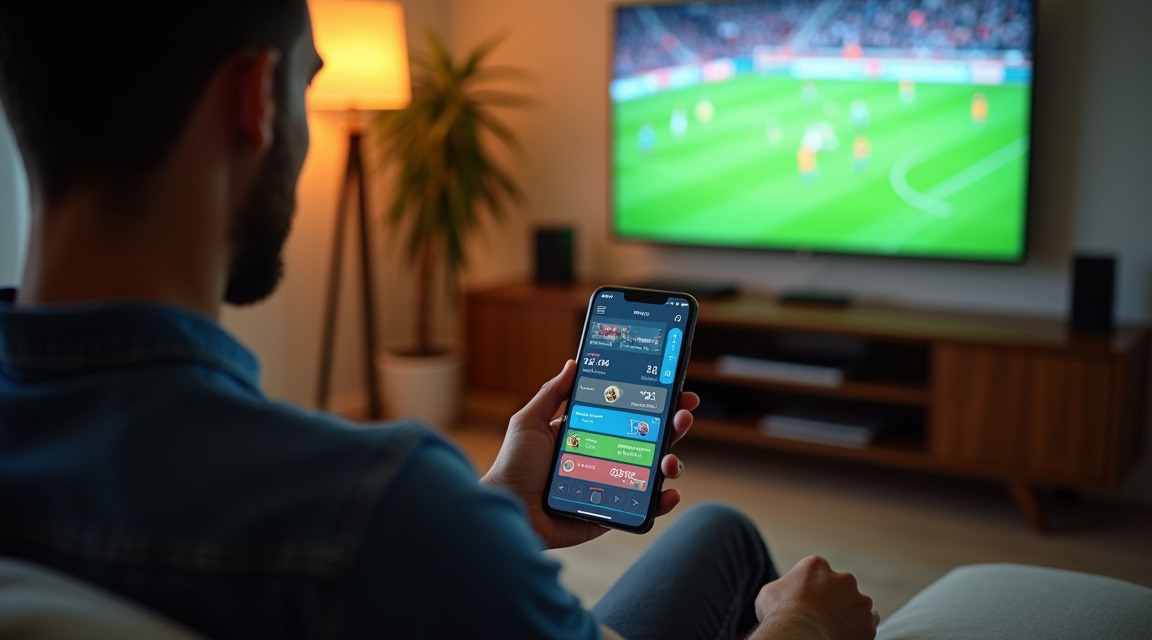
Live sports and daily online games have grown together into a single fan routine over the last three seasons. What used to be two separate habits, watching a broadcast on one screen and playing a casual game on another, has merged into an interconnected loop where real-time stats, live-scoring fantasy picks, mini-games, and in-play markets all move in sync with the game on television. Survey data collected during the 2025 NFL playoffs suggested that more than nine in ten US viewers aged 18 to 34 used a second screen at some point during a live broadcast, and the share of that second-screen time spent inside sports-adjacent apps kept climbing through the 2026 college basketball window. The practical effect is a fan experience that feels closer to the action, even for someone watching from a couch several thousand miles from the arena.
The Second-Screen Shift From Social Feeds to Sports-Specific Apps
A decade ago, second-screen activity during a live game was mostly scrolling social media and occasionally checking a scoreboard. The behavior has changed markedly since 2023. A significant majority of US viewers now keep a sports-specific app open alongside the broadcast, and the split between those apps has become one of the most closely watched metrics in the category. Fantasy lineup trackers, live-scoring daily games like Pickup and PrizePicks, real-time prop markets, and prediction platforms all compete for the same attention window. The most useful apps share a single design trait: they surface information that matters within the flight of the ball, the next pitch, or the next possession, without requiring a fan to leave the broadcast to understand it. That tight feedback loop between a live action and a small piece of data on a phone has made the second screen feel less like a distraction and more like an extension of the broadcast itself.
Live-Scoring Daily Games Tied to Real Events
A category of daily online games has grown up specifically around live sporting events, where picks are scored in real time against the actual game unfolding on television. Sleeper, Underdog, PrizePicks, and Pickup have each built products in which a fan submits a lineup before tip-off, then watches the points accumulate play by play. Underdog Fantasy reached a valuation of 1.225 billion dollars in early 2025, nearly triple its prior valuation, and PrizePicks announced the completion of Allwyn’s majority stake of 62.3 percent in January 2026 at a billion-dollar deal size. Most of these daily games now refresh scoring every few seconds during play, which turns a traditional fantasy roster into a constantly updating leaderboard tied to what a fan is watching on the main screen.
Mini-Game Overlays and Prediction Widgets During Broadcasts
Broadcasters and streaming platforms have moved past simple scoreboards and begun embedding prediction games directly inside the video player. ESPN’s streaming product, Prime Video’s Thursday Night Football, and YouTube’s NFL Sunday Ticket have each added interactive widgets during the 2025 and 2026 seasons that let a viewer predict the next play, the next drive outcome, or the next scoring margin, with points accruing across the broadcast. These are not wagering products. They are free, logged-in mini-games that produce small rewards and leaderboards. Industry estimates from late 2025 suggested that between 15 and 22 percent of streaming sports viewers in the US had engaged at least once with an in-player prediction widget during an average regular-season week, a share that climbs sharply for championship rounds. The mechanic works because it uses the time a fan is already spending on the broadcast. A single tap between plays is enough to feel part of the action, and the aggregate engagement has been large enough to keep broadcasters investing in better widgets for the 2026 postseason.
Live Odds and In-Play Markets as Part of the Fan Toolkit
Sportsbook-style markets used to close well before kickoff. In-play markets have since become one of the fastest-growing segments of the live sports experience, independent of whether a fan places a wager. Reading in-play odds during a broadcast has become a way to understand momentum in a game numerically, not just visually. A shift from plus 120 to minus 140 on the second-quarter winner conveys a swing that the commentary team may or may not be describing at the same moment. For fans who want to compare prices across books in real time rather than trust a single sportsbook feed, a live odds comparison tool that aggregates lines from the major US operators and flags stale prices as the market adjusts can surface the best number available at any given minute. Mature aggregators compare sportsbook prices across the major US books in real time and flag when a line has gone stale, meaning the market has moved elsewhere but one book has not adjusted yet. That combination of market movement data and direct price comparison has turned the live odds feed into a broadcast-adjacent tool, used by many viewers who never place a wager.
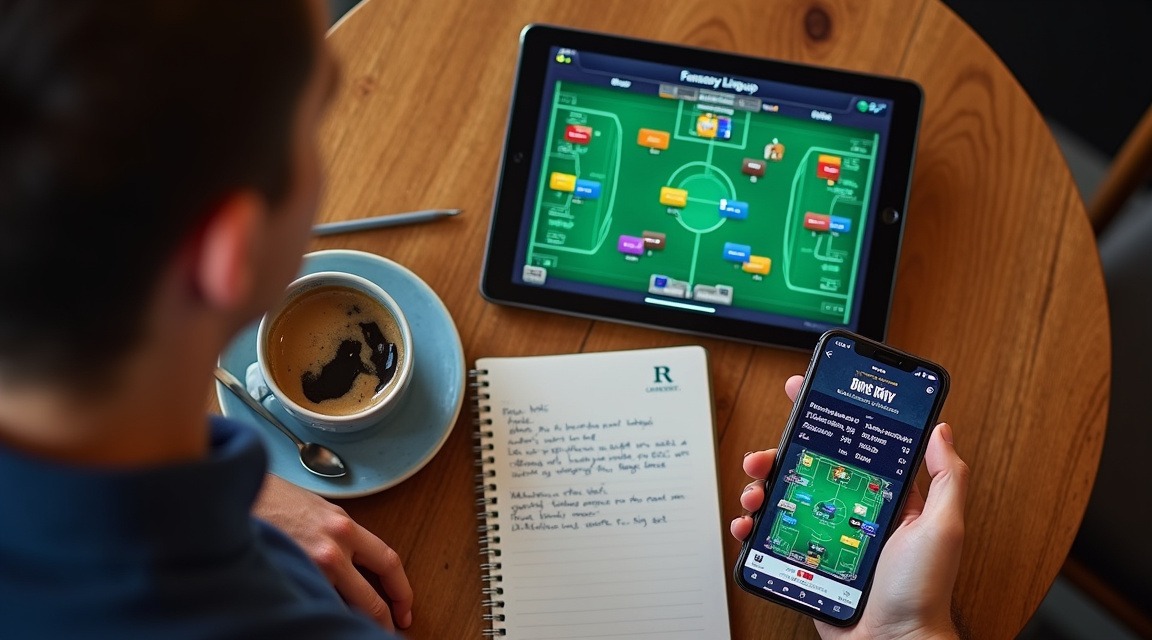
Image by Sophie Harlan
Real-Time Prediction Games and Daily Challenges
A parallel category of daily online games focuses on prediction rather than fantasy scoring. Kalshi, the federally regulated event-contract exchange overseen by the CFTC, reported sharply rising volumes on sports markets through the 2025-2026 college basketball window, and its availability in all 50 states has given it a reach broader than traditional mobile sportsbooks. Daily prediction challenges on Sleeper and Underdog work similarly, offering a short list of yes-or-no questions tied to the day’s games, scored at the end of each matchup. The gameplay loop is intentionally compact: pick five questions before tip-off, follow the games across the afternoon, and see a ranked leaderboard by the last whistle. These challenges reward sustained attention across multiple games rather than focus on a single matchup, which has quietly reshaped weekday viewing patterns on RSN and national streaming feeds, since a daily challenge can create interest in a mid-week matchup between non-contenders.
A Side-by-Side View of Live-Companion Games
The table below summarizes the four most common live-companion game types that have matured into mainstream products by the start of the 2026 sports calendar, along with the type of fan each tends to attract and the rough minute-by-minute interaction pattern each produces during a single broadcast.
| Game Type | Example Platforms | Typical Fan Profile | Pattern During Broadcast |
| Live-scoring fantasy | Sleeper, Underdog, PrizePicks | Committed follower of 2-4 players | Checks leaderboard at each scoring play |
| In-player prediction widgets | ESPN, Prime Video, YouTube | Casual streaming viewer | One tap per drive or possession |
| Daily prediction challenges | Sleeper, Underdog, Pickup | Multi-game viewer across the day | Five picks up front, passive watching |
| Live market comparison | Aggregator apps and sites | Informed watcher, analytical fan | Glances at odds between plays |
No single type has won the category. A fan with an ordinary weekday broadcast schedule now has a reasonable chance of using two of these formats at the same time, and that compounding behavior explains much of the growth in second-screen engagement numbers reported by streaming platforms through the first quarter of 2026.
Fantasy Lineup Updates Happening In-Play
The separation between a pre-game fantasy lineup and an in-play adjustment has softened on most major platforms. Season-long fantasy apps still lock rosters at kickoff, but daily fantasy products and pick’em games now allow an expanding set of mid-game adjustments that mirror a live audience. In a few live markets, fans can pair an in-play roster change with a same-moment line comparison through an odds feed, pulling sportsbook prices from the major US books to check whether the market agrees with the read on a shifting game state. Legal Sports Report coverage of prediction market momentum highlights how rapidly federally regulated event-contract platforms have scaled, with surging trading volumes and sportsbook crossover accelerating the emergence of overlapping user bases that were not meaningfully aligned just a few seasons ago.
How Daily Online Games Pair With Different Broadcast Windows
The most active pairings between daily online games and live sports happen in specific broadcast windows. Sunday afternoon NFL slates, Saturday college basketball quad sessions, weeknight NBA doubleheaders, and the opening days of March Madness all concentrate enough parallel games to make a daily challenge feel alive. Outside those peak windows, pairings skew toward single-event fantasy and in-player widgets rather than full daily challenges. Industry coverage of short daily game sessions study coverage has noted that fans increasingly want gameplay that slots into a busy day rather than sessions that demand a full evening block. A well-built daily challenge today asks for five to eight taps across an afternoon, not an hour of continuous focus, which is roughly the attention a fan can spare while a broadcast plays.
Six Shifts Shaping the 2026 Convergence of Daily Games and Live Sports
Operators, broadcasters, and data providers are tracking a consistent set of shifts across the 2026 calendar year. The list below captures the six that analysts across sports-media research have pointed to most often when describing how daily online games and live sports will continue to merge in the coming seasons.
- In-player prediction widgets spread from flagship broadcasts to mid-week RSN feeds, closing the engagement gap between tentpole games and ordinary regular-season matchups.
- Live market movement, stale line flags, and in-play price comparison become a normal part of the fan toolkit, used by many viewers who never place a wager.
- Season-long fantasy apps add more mid-game adjustment features, reducing the gap between daily and seasonal products.
- Federally regulated prediction exchanges widen the set of live markets that operate in all 50 states, shifting attention outside traditional mobile sportsbooks.
- Data providers like Sportradar, Genius Sports, and Stats Perform deepen the real-time feeds behind daily games, improving the granularity of live-scoring widgets.
- Streaming platforms fold more interactive widgets inside the video player itself, reducing the need for a separate app to participate in a daily game.
Together these shifts point toward a fan experience in which a single broadcast anchors several simultaneous layers of interaction, rather than sitting at the center of a fan’s attention by itself. That convergence is already visible during the headline events on the 2026 calendar.
Tentpole Events That Will Test the Convergence in 2026
Several events on the 2026 calendar will test this convergence at scale. The FIFA World Cup hosted across the US, Canada, and Mexico in June and July will bring a global audience into a window where US daily fantasy and prediction apps have never competed at that scale before. The NBA In-Season Tournament, now in its third edition, has built a reputation for concentrated widget engagement during tournament weeks. The NFL 2026 regular season continues to anchor Sunday afternoon second-screen usage at levels no other property in the country matches. The winners of those tests tend to set the design pattern for the following 12 months.
A 2026 Outlook for the Daily Games and Live Sports Fan Toolkit
By the end of 2026, the divide between live sports viewing and daily online games will feel thinner than at any prior point in the category’s history. Fans will expect interactive widgets inside streaming video, not just on a separate phone. Data feeds will update faster, and the number of live markets available across state lines will keep growing as prediction markets expand under CFTC regulation. What stays constant is the underlying motivation. Fans reach for these tools because they want to feel closer to the action on the main screen, and the products that succeed are the ones that tighten the feedback loop between a play on the field and a small update on a phone.
Frequently Asked Questions
What counts as a daily online game in the context of live sports viewing?
A daily online game in this context is any product that asks a fan to make picks or take actions tied to a live sporting event within a single day, with scoring that resolves by the end of that day’s matchups. Examples include daily fantasy lineups, pick’em challenges, in-player prediction widgets, and short prediction-market contests on event exchanges.
Why has second-screen activity shifted toward sports-specific apps?
Sports-specific apps surface information that matters inside the flight of a play, a pitch, or a possession, which makes them more useful to a fan watching live than a generic social feed. The feedback loop between the broadcast and the app is tighter, so minutes between plays feel more productive on a live scoreboard, a fantasy tracker, or an in-play market.
Are live odds only useful to people who place wagers?
No. A large share of fans who never place a wager still check live odds to understand momentum numerically. A shift from a favorable line to a narrow margin conveys information that the commentary team may not describe at the same moment, and an aggregator that compares sportsbook prices in real time can flag stale lines and show market movement as an additional layer of context on the game.
How much data do daily online games actually use during a live broadcast?
Most live-scoring daily games and prediction widgets are designed to be lightweight on data, since the content is mostly small score updates, odds refreshes, and pick confirmations rather than video. A fan can usually run a live fantasy tracker and an in-player widget through an evening broadcast on a standard home network without noticing added load.
Will prediction markets fully replace traditional sportsbook apps for live sports fans?
Not fully. Prediction markets expanded quickly through 2025 and early 2026 because of broader state availability under CFTC regulation and because their event-contract structure fits naturally with short daily events. Traditional sportsbook apps still offer deeper market depth, larger in-play markets, and parlay products that prediction exchanges do not match today. The more likely outcome is a fan toolkit that uses both categories side by side.