
Early video games were a lot less systematic and identifiable in their promotional design. While they might have still had components like daily rewards and limited-time events, they weren’t as layered and complex, nor framed as “retention systems” as they are now. Because gamers have become so accustomed to standard design terms like “streak bonuses” and “tiered passes,” game developers don’t disguise them anymore.
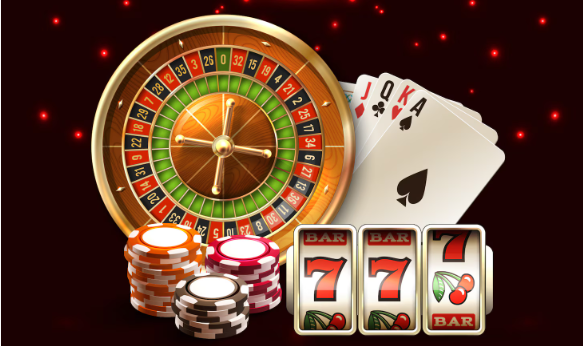
The structure these elements have settled into is reminiscent of another industry that’s made the rounds recently—the casino sector. Casinos have spent decades refining promotional systems that solve the same core problems live service and online games have: getting people to return, maximizing engagement, and making each visit feel meaningful. While video games and casinos don’t necessarily cater to exactly the same audiences, both ultimately optimize for the same variables in environments where novelty fades quickly.
Two Industries, One Engagement Program
Casinos and game developers have long worked on the same problem—and that’s figuring out how to make a voluntary digital experience feel rewarding enough for return visits, without the rewards starting to feel transactional and baseless. Although both industries may use different language to describe the problem, they’re still asking the same questions about why people come back, leave, and stay longer.
In casino environments, the focus tends to hover around acquisition, retention, and reactivation in the form of reload bonuses and various promotions. Each component is structured around a simple behavioural goal. Meanwhile, in game development, they express the same ideas through metrics like onboarding flow, daily active users, and churn, showing up as battle passes and rotating storefronts. The surface always changes, but the function is to build systems that create some sort of predictable rhythm.
Instead of having one big reward that keeps someone engaged forever, it’s often smaller systems stacked on top of each other that do the trick. Both industries tend to converge on things that reward players for showing up regularly, things that exist for a limited time to give players a reason to return, and things that gradually get better the longer they stay involved.
What Casino Promotions Are Really Trying to Solve
When people hear “casino promotional design,” they often think of a collection of bonuses and flashy marketing banners. In reality, it operates much more like a lifecycle management system. Instead of a simple question like “What reward should we give?” The queries are more tactical and consider timing, context, and player state. Questions such as “When is the player most likely to disengage, and what incentive could help change that decision?” encourage designers to ask important questions about motivation, relevancy, and where the problem really lies.
If we take a look at a classic system, it often starts with welcome bonuses to reduce friction during the first session, where uncertainty is highest, and players are still deciding whether the experience is worth exploring. Then, reload bonuses come later, after the initial novelty and return rates begin to fade. Loyalty programs help create a longer-term layer that gives players a reason to continue coming back despite potentially unremarkable single sessions.
Taken together, these mechanics form the broader promotional system that casinos thrive on. There’s a lot of documentation on how casino promotions attract players, especially in operator-facing breakdowns that map out promotional stacks. And developers can browse through these to see how the mechanics fit together in practice. The sequencing is what tends to matter most, with each mechanism targeting a different point in the player lifecycle. For anyone who has worked on a live-service game, the stages of acquisition, early retention, reactivation, and long-term loyalty should sound familiar.
Where F2P and Casino Design Overlap
Engagement mechanics don’t often remain unique to the industry they were first popularized in. Instead, they simply get adapted elsewhere. Once a pattern is proven to be reliable and bring people back, it tends to spread and adapt to fit the product.
In free-to-play games, battle passes turn engagement into a trackable arc, while daily login rewards create low-friction reasons to return even when there’s no strong intent to play. Seasonal events introduce scarcity through timing, which influences when players show up but allows them the freedom to do what they want once they’re there. As we’ve seen, casino systems operate on a similar logic, but with a longer history of refining the same kind of systems. Casino design has had decades of pressure testing the same problem, which is why the patterns are more layered and the systems are more segmented around behaviour shifts.
Regardless, these industries end up building similar systems to solve the same problem: reaching people who don’t stay continuously engaged.
Practical Lessons From Casinos for Game Developers
Casino promotional systems aren’t directly transferable to games, but they do make specific design problems easier to see. After stripping away the context, you can visualize a few patterns around timing, structure, and incentives within a player lifecycle—especially when you look at the entire system instead of individual mechanics.
Tiered systems outperform one-off rewards
While it might seem like simplicity is the key, casinos have proven that layered loyalty systems are often the better way forward. They rarely rely on one-off, identical rewards and instead choose formats where benefits accumulate over time. The longer a player is active, the more tiers unlock, and the more benefits accumulate. Flat rewards, on the other hand, tend to reset every interaction. Tiers create continuity, which changes how players perceive progress. Even the smallest differences in structure can make ongoing engagement feel more intentional.
Incentives feel different when they’re expected
There’s a distinction between rewards that feel like gifts and rewards that feel like an obligation. In the context of casino design, regularity matters because it teaches players to expect returns as part of participation. However, in games, a predictable reward loop can build a habit or create fatigue if the value doesn’t scale with repetition.
Systems matter more than individual offers
A word that’s been coming up repeatedly is “system.” No single promotion does as much work on its own as it does when multiple fit together over time. Casinos think in terms of stacks across a lifecycle, and that framing is what separates isolated engagement features from a coherent retention system.
Where Casino Design Stops Translating
Naturally, the overlap between casino systems and game design has limits, and unfortunately, they matter just as much as the similarities. Some mechanics don’t carry over cleanly because the conditions that make them work in casinos don’t exist in games at all. The most obvious one out of them all is the presence of a stake. Real money is part of every casino environment, which creates a baseline urgency that no in-game currency will replicate exactly. A bonus feels entirely different when tied to financial risk, even if the structure of the reward system looks similar on paper.
Secondly, there’s the regulatory aspect. Casino promotions operate under constraints that determine how they’re presented, how often they show up, and what expectations players have going into the experience. That context influences behaviour in ways that free-to-play games don’t reproduce. In essence, players are already primed to interpret incentives in a unique way.
If developers blindly borrow mechanics without accounting for those differences, the result is often not what they expect. Systems that rely too much on constant prompts can start to feel overly transactional and mechanical, unlike well-crafted casino promotions.
Where Better Game Design Insights Come From
Looking across industries is often where the strongest design thinking comes from because it forces you to see familiar problems without all the assumptions. Staying inside one domain makes it easy to stay stuck on the way things are “supposed” to work. As games have never evolved on their own, it’s useful to look at systems built under different constraints. Casino promotional design is one of the most developed examples of engagement engineering, yet it remains overlooked by game developers.