
Cybersecurity has come a long way in recent decades. A good password and antivirus are no longer enough to feel safe in the online world. Phishing scams are getting more sophisticated, ransomware attacks threaten businesses, and companies turn to cloud technology, remote work, devices, and the digital world in general.
This is where zryly.com comes into play.
Instead of focusing on the technical aspects that only specialists can understand, Zryly.com makes it a point to demystify complex concepts of the digital world and make them accessible to everyone in practice. The site covers cybersecurity topics as well as those related to VPNs, networks, hosting, domains, internet privacy, and many others in relation to how people safely navigate the digital world.
So, how does this fit into cyber-resilience, and how is that different from just preventing cyber-attacks?
Let’s see what they are all about.
What is Zryly.com?
Zryly.com is a technological website aimed at educating the reader and helping the reader navigate the modern digital environment. Besides cybersecurity, Zryly.com contains content related to VPNs, networks, internet, domains, and web hosting.
The approach is relatively straightforward; namely, the idea is that digital safety measures should not solely rely on technical expertise.
Its cybersecurity content covers practical topics related to password security, phishing, multi-factor authentication, personal information security, and keeping devices up to date.
This approach is critical, because, although cybersecurity is partially a technology problem, it remains primarily a human problem. Technology can be compromised by human error (e.g., clicking on a phishing link, sharing a password, failing to update a device).
What is Cyber-resilience?
Prior to exploring the role Zryly.com cybersecurity can play in cyber-resilience, it is crucial to clarify the meaning of cyber-resilience.
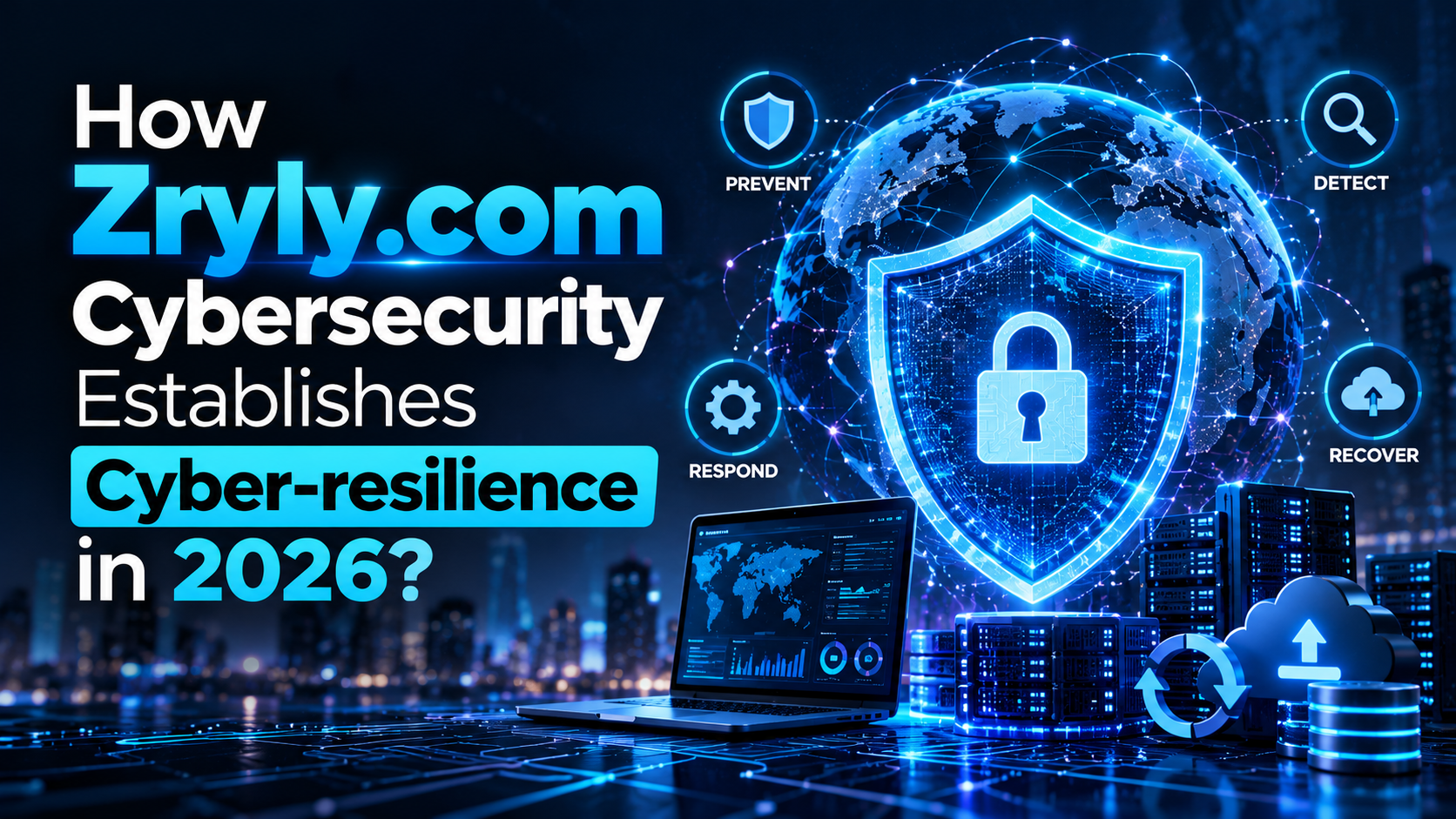
Cybersecurity, in essence, is about preventing unauthorized access, cyber-attacks, and data theft. Cyber-resilience goes beyond that, however, by requiring that a person or organization that experiences a cyber-attack can:
1. Reduce the likelihood of an attack;
2. Quickly detect suspicious activity;
3. Respond adequately to incidents that occur;
4. Recover lost data and systems;
5. Learn from the experience and improve the current state of affairs.
It is important to emphasize that cyber-resilience does not mean that cyber-attacks or security incidents will not occur; rather, it means that an experience with one will not leave lingering damage.
Understanding cyber-resilience also means Exploring be1crypto.com Blockchain and Its Impact on data security, transparency, and trust in digital transactions.
How Zryly.com Cybersecurity Supports Cyber-resilience

Cyber-resilience is especially relevant in 2026, as digital reliance is increasing by the day, and any security incident can negatively impact both personal and business-related affairs.
How Does Zryly.com Cybersecurity Contribute to It? Here are 5 Ways.
1. Building Cybersecurity Awareness
A simple way to improve cybersecurity is to know what a threat might look like.
Zryly.com covers key elements related to phishing, suspicious links, poor password security, data exposure and data leaks, and unsafe online practices.
The importance of such measures cannot be underestimated, because being aware of common cyber threats can serve as the best protection mechanism.
An example of that is phishing emails: if a user knows what a phishing campaign is, they have a much lower chance of falling victim to it.
For instance, a phishing email may appear to be sent by one’s bank and request to verify one’s account by clicking on a suspicious link.
A user who knows what to look for will be able to examine the request more carefully and avoid becoming a victim of scams.
2. Encouraging Stronger Account Security
A common theme in cybersecurity is that a strong password is the user’s best defense against external threats. In that vein, Zryly.com advocates building account security, including the use of two-factor authentication.
The principle is relatively simple: it is unwise to rely on a single method of account access security, and having two-factor or multi-factor authentication (2FA or MFA) is significantly more secure.
3. Strengthening Privacy Through VPN Awareness
Cyber-resilience extends beyond privacy and cybersecurity. Privacy, in essence, is a part of cybersecurity, as it revolves around the protection of personal data.
Zryly.com covers the topic of virtual private networks (VPNs) in depth. In particular, it explains the key concepts related to how a VPN can make the user safer online, including when they are using risky networks.
Public networks are a common example of that, as airports and other such locations may provide free Wi-Fi for visitors. However, Wi-Fi is not always secure, and using it can put one’s personal information at risk.
4. Connecting Cybersecurity With Network Security
A secure device is only one element of a larger network. In particular, modern digital environments have many elements, including routers, servers, cloud services, mobile devices, computers, apps, and connected devices. The security of a device, therefore, is only as good as the security of the larger network it is a part of. This is why Zryly.com’s approach to networking is critical to cyber-resilience.
It goes beyond the basics and explores networking concepts and protocols. Being aware of fundamental concepts, including the Internet Protocol (IP) address and related ideas, can be crucial to one’s cyber-resilience. Moreover, the concepts are relevant for businesses and their employees who work with cloud services remotely.
5. Promoting Regular Security Updates
Cybersecurity can be a continuous process, and a part of it is maintaining devices and software up to date. This way, potential system weaknesses can be addressed promptly.
Zryly promotes regular device and software updates and covers the basic cybersecurity practices necessary to ensure one’s safety.
They may seem mundane, but not updating a device or software can leave it exposed to known vulnerabilities.
Cyber Threat Description Can the Approach Help?
Phishing Scams Attempts to acquire user credentials, finances, and personal information through deception. Yes Ransomware Encrypts a victim’s data and demands ransom for decryption. Yes Malware A broad term that refers to software that can damage devices or systems. Yes Social engineering A type of phishing where targets are approached directly, e.g., impersonating an employee. Yes Network threats Threats that are related to networks and unsafe practices, such as unsafe Wi-Fi.
Why the Human Element Matters in Cybersecurity
One of the strengths of Zryly’s approach is its accessibility. Cybersecurity advice can become overly technical, which turns many users off.
The advice can include concepts such as encryption, zero-trust networking, and tunneling, which may confuse many users. Zryly’s approach, on the other hand, makes an effort to simplify concepts without relying on jargon. Its stated mission is to educate the general public on the technical aspects of the digital world.
Understanding foullrop85j.08.47h Gaming And What Players Need to Know can also help gamers recognize emerging digital risks and make more informed decisions about online gaming security.
Zryly’s Approach to Cybersecurity vs. Traditional Cybersecurity Tools

It is important to note that Zryly’s approach should not be seen as a substitute for enterprise-level security software, tools, and expertise.
A good way to understand the strengths and limitations of Zryly’s cybersecurity approach is to highlight its differences with the approaches used by traditional security tools. Below are some of the most critical distinctions.
Zryly Approach Traditional Security Tools Focuses on providing guidance Focuses on providing protection Explains technical concepts Often concentrates on specific tools Helps users identify threats Manages threats on the user’s behalf Helps build digital awareness Can operate on an automated level Can be helpful for users Can require specialized expertise Concentrates on a broader set of digital security issues May concentrate on a narrower set of issues Pertains to privacy, networking, and hosting Often pertains to system-specific security
In practice, both approaches are important, because the two compliment each other.
A security tool can protect a device, but a user may still need to be wary of phishing emails.
Practical Ways to Build Cyber-resilience With Zryly
Individuals can apply the cybersecurity-related knowledge covered by Zryly by remembering a few practical rules.
They are as follows:
- Remember to use strong, unique passwords for all important accounts;
- Consider enabling two-factor or multi-factor authentication (2FA or MFA);
- Make sure to update all software and devices;
- Be wary of suspicious links;
- Use safe networks, especially with sensitive information;
- Educate oneself on such concepts as virtual private networks (VPNs) and network security, rather than viewing them as something mysterious;
- Avoid exposing personal information on social media and other platforms;
- Ensure that important files are backed up;
- Regularly check if any changes to accounts occurred;
- Remember that threats will continue to evolve, so it is important to be aware;
The Future of Zryly’s Cybersecurity Approach
Cybersecurity will continue to change as new technologies emerge. Artificial intelligence (AI), cloud services, connected devices, and more advanced Internet services will shape the future of cybersecurity. The future will bring new technologies that may require users to adapt their approaches to cybersecurity. Zryly’s broader scope of the digital world (rather than a specific focus on cybersecurity) will be crucial in that regard. By covering hosting, domains, networking, and VPNs, Zryly covers all sides of the digital experience.
As AI platforms continue to evolve, a Joyland AI Review 2026: Features, Pricing, Safety & Alternatives offers a closer look at the privacy and safety considerations users should understand when exploring AI-powered tools.
Conclusion
Cyber-resilience ultimately comes down to preparation and awareness. You cannot predict if a cyber-attack will happen or not. However, you can minimize the possibility that it will occur or lessen its impact on your person or organization. That is where Zryly’s approach can help.
By giving cybersecurity guidance, information privacy and safe online practices, and related concepts, Zryly makes sure that the audience is properly prepared to face cybersecurity challenges. The takeaway from this section is simple, that cybersecurity knowledge should not be the domain of technical experts. Rather it should be known and practiced by all since it can be the difference between a cyber-attack and no cyber-attack in 2026.