
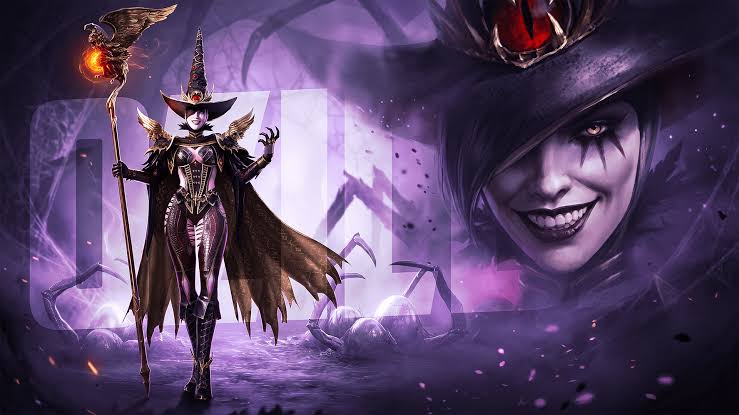
Ozilda the Wicked showed up in RAID: Shadow Legends this week, and the Echoes of Oz event dungeon boss has half of Telaria’s Discord servers running summon calculators before they’ve even logged in. HellHades posted early speculation on the event’s champion pool days before the drop, and the guesswork alone generated more engagement than most actual patch notes do.
That’s not an accident. It’s not really about Ozilda either. It’s about what happens in your head between clicking “Summon” and watching the shard crack open.
Plarium built RAID’s economy around scarcity and randomness, the same two ingredients every gacha game leans on. Void Shards, Sacred Shards, the newer Oz-themed summon currency, they all funnel players toward the same lever-pull moment. You’ve probably felt the tiny jolt when a 5-star flashes gold instead of the usual grey. That jolt is doing more work than the actual champion is.
What Makes a Summon Feel Different From a Purchase
Buying a champion outright would feel like a transaction. Summoning for one feels like an event. The difference is the uncertainty window, that two-second animation where you don’t know what you’re getting yet.
Psychologists have a name for the underlying mechanism: variable ratio reinforcement. It’s the same schedule that makes slot machines and rat-in-a-box experiments behave identically under the hood. Unpredictable rewards, delivered on an unpredictable schedule, produce far more repeat behavior than a reward you can count on. Psychology Today’s breakdown of the “Vegas Effect” of our screens walks through why this exact loop shows up everywhere from slot machines to social media notifications, and RAID’s summon screen is a fairly literal implementation of it.
Here’s the part that gets skipped in most gacha discourse. Researchers publishing in Nature Human Behaviour found that loot box mechanics share structural and psychological features with gambling, not as a loose metaphor but as a measurable overlap in how the reward uncertainty is engineered. RAID isn’t a casino. Nobody’s arguing that. But the summon shard economy was clearly built by people who understand exactly why casinos work.
That overlap gets murkier the moment real money enters the picture, and it usually does. Sacred Shard packs cost real currency. So does most of Genshin Impact’s wish system, which just got a fresh wave of attention with the Version 7.0 Snezhnaya content drop this week. Different developer, same lever.
When the reward loop crosses into actual real-money wagering, and it increasingly does for players who chase the same rush on licensed casino platforms, the thing that actually matters is whether the operator tells you the truth about your odds. Most don’t disclose payout percentages clearly. A few do, and the ones that publish real return-to-player data and verified cashout speeds are the ones worth trusting with money instead of shards. The highest payout online casinos tested by South Philly Review is one of the few resources that actually tested withdrawal times and payout rates rather than repeating marketing copy, which is the entire point when you’re comparing a summon screen to a slot reel: one costs you a Sunday, the other costs you your paycheck.
Gambling involves real risk. If any of this hits closer to home than a game mechanic should, that’s worth paying attention to, and BeGambleAware.org has resources for exactly that.
Why Your Brain Doesn’t Treat Ozilda Like a Boss Fight
Go back to the actual event. Echoes of Oz isn’t hard because Ozilda hits like a truck, although she does. It’s compelling because the path to beating her runs through a currency you have to gamble for first. You’re not just fighting a boss. You’re grinding shards, summoning champions you might not need, and building a roster through repeated exposure to uncertainty.
That’s a deliberate design choice; it’s not incidental. Compare it to the Void x2 and Celendiel x10 summon events that ran earlier this month. Same structure, different skin. Plarium rotates the flavor of the event but keeps the underlying pull mechanic constant because it works. It has worked since gacha games existed, and it worked in slot halls decades before that.
A 2019 replication study published in PLOS One looked at this directly. Researchers found that loot box spending correlates with problem-gambling symptoms across multiple independent samples, not just one flawed dataset. The correlation doesn’t mean every RAID player is at risk. It means the mechanic isn’t neutral, and pretending otherwise doesn’t help anyone make better decisions about where their money goes.
Most players never spend a dollar on Sacred Shards. They grind, they summon with free currency, and Ozilda eventually falls to a well-built team. That’s fine. That’s most of the playerbase, honestly. The players worth worrying about are the ones who feel the urge to convert a bad pull into “just one more” purchase, because that specific impulse is the one variable ratio schedules are engineered to produce.
The Tell Is in How Long You Wait Before Summoning Again
There’s a simple gut check that tells you more than any spending cap. Watch how long you wait between a bad pull and your next summon attempt. If it’s instant, if there’s no pause at all, that’s the reinforcement schedule doing exactly what it was built to do. A few seconds of hesitation is normal. Zero hesitation, every single time, is the pattern worth noticing.
This isn’t unique to RAID. Genshin’s wish banners run the identical psychology with prettier art direction. Rise of Kingdoms gates progression behind similar RNG walls. If you want a broader sense of how these discovery-driven mobile titles stack up against each other mechanically, our Go Get Games portal review covers several of them side by side, and the summon-gated progression shows up in nearly every one.
The honest answer for most players is that Ozilda’s event is fun. It’s meant to be. Plarium didn’t build a bad system, they built an effective one, and effective isn’t automatically predatory. The difference between a healthy gacha habit and an expensive one usually comes down to whether you’re tracking your spend or just chasing the next gold flash.
Frequently Asked Questions
Is the Ozilda event worth grinding for in RAID: Shadow Legends? If you’re already active in Champion Boss content, yes. Her skill kit fits well into speed-focused teams, and the Echoes of Oz rewards track includes shards you’d otherwise wait weeks to accumulate through normal progression.
Why do loot boxes feel similar to gambling even though they’re not real money? Both use variable ratio reinforcement, delivering unpredictable rewards on an unpredictable schedule. That structure produces stronger repeat behavior than a guaranteed reward would, regardless of whether real currency changes hands.
Does spending real money on Sacred Shards actually improve summon odds? No. Paid and free shard summons draw from the identical probability tables. Spending only buys more attempts at the same odds, it doesn’t shift the underlying rates in your favor.
How is the Void x2 and Celendiel x10 event different from Echoes of Oz? Structurally, almost nothing changes. Different champions, different shard skins, same summon mechanic underneath. Plarium rotates cosmetic framing regularly while keeping the core reward loop consistent across nearly every event.
Should I be worried if I keep summoning right after a bad pull? A brief pause between pulls is normal. Zero hesitation every time is worth noticing, since that’s the exact pattern variable reward schedules are designed to produce. It doesn’t mean there’s a problem, just that it’s worth tracking.
Ozilda will get power-crept eventually, the way every meta champion does. The summon screen that introduced her won’t change much at all. That’s the part worth remembering next time the shard count hits zero and the urge to buy more shows up before the loading screen even finishes.