
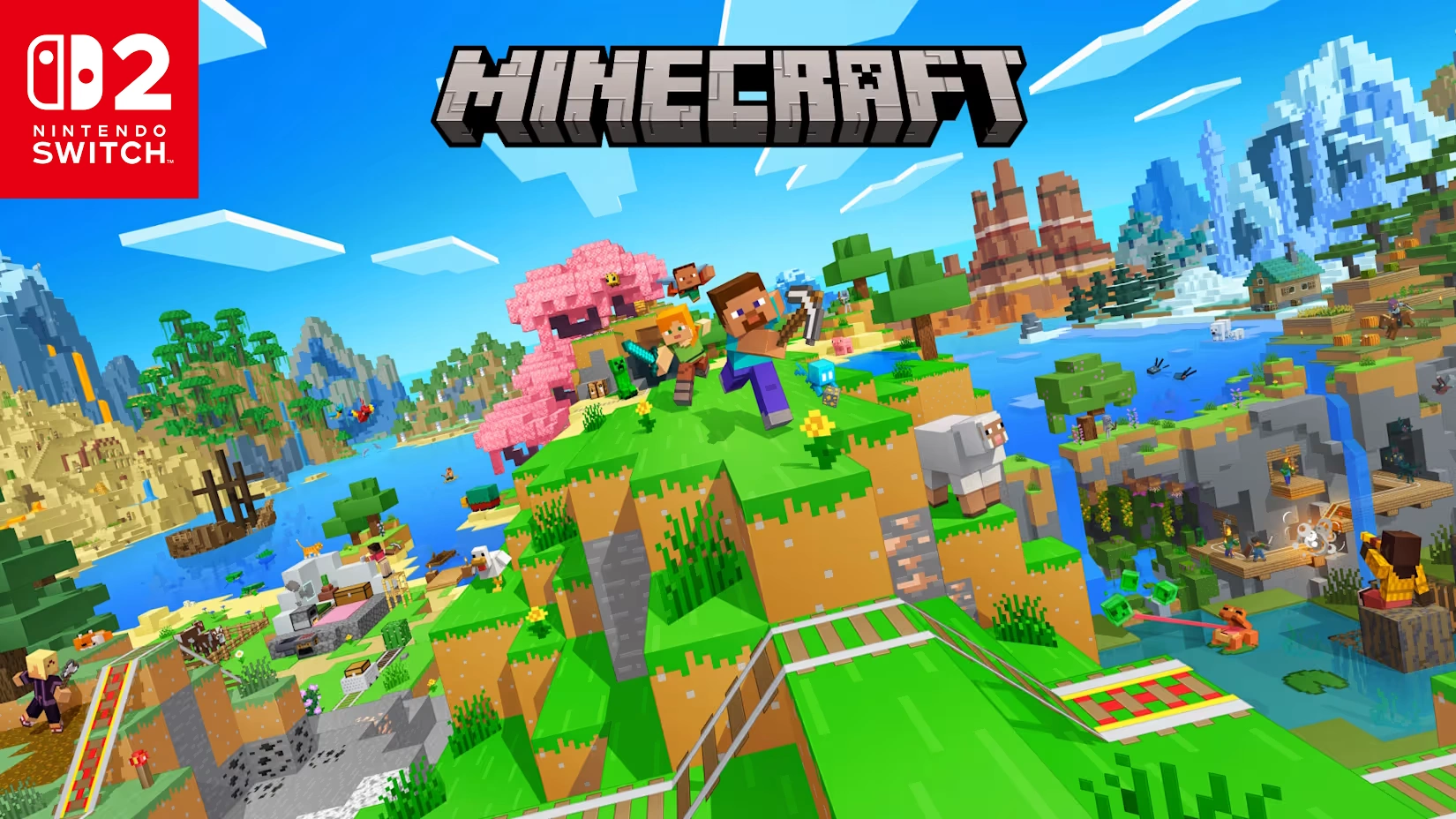
Minecraft is coming to Nintendo Switch 2 on October 27, and the internet is already acting like this is the console’s defining moment. Minecraft Live 2026 confirmed the port alongside a Vibrant Visuals update that reworks lighting, shadows, and water rendering for the newer hardware. A Minecraft hotel is apparently opening in 2027, which is its own strange rabbit hole. But the headline here isn’t the hotel. It’s the port itself, and whether it’s going to hold up once a few million people actually boot it on launch day.
Switch 2 has had a strong first year by most measures. Nintendo has raised its global sales forecast more than once since launch, and Minecraft arriving now feels less like a modest update and more like a flagship moment for the console’s back half of the year. That’s exactly the kind of launch where hype outruns substance. Big names, big trailers, big expectations. Sometimes the game delivers. Sometimes it doesn’t.
Crossover Ports Have Burned Us Before
Minecraft isn’t new to multi-platform jumps. It’s been ported, re-ported, and re-engined more times than most franchises attempt in a decade. Bedrock Edition alone has shipped across Xbox, PlayStation, mobile, and now two generations of Switch. Most of those transitions went fine. A few didn’t.
The original Switch version launched in 2017 with framerate dips that took months of patches to sort out. Nothing catastrophic, but enough that early reviews flagged stuttering in villages and busy builds, the exact kind of thing a marketing trailer never shows you. Trailers show clean builds, ideal lighting, zero mobs on screen. They’re built to sell a vision, not to demonstrate how the game runs when forty zombies spawn at once during a blood moon.
This is where the pattern breaks down for me, and it’s why I don’t preorder anymore. Three or four disappointing crossover launches will do that to a person. I’ve learned to wait, not because I don’t trust Mojang or Nintendo specifically, but because I don’t trust my own excitement to judge a product fairly. The fix isn’t complicated. It’s where I check scores before buying a new game, looking at the aggregate instead of the thirty-second trailer loop. One outlet’s glowing preview means nothing on its own. Ten outlets converging on the same framerate complaint means something.
Minecraft’s Vibrant Visuals update is a genuinely interesting technical swing. Better lighting, improved shadow rendering, water that actually reflects the sky instead of looking like flat blue carpet. [Industry coverage of the Minecraft Live reveal](https://bleedingcool.com/games/minecraft-live-2026-reveals-multiple-updates-new-content/ ) framed it as a serious visual leap for the Bedrock engine, not just a marketing bullet point. That’s worth being excited about. It’s not worth preordering over, especially on a device that’s still finding its footing with third-party and first-party crossloads a year into its life.
Gambling has run into the exact same honesty problem, just with numbers instead of trailers. A sportsbook can advertise odds that look generous in isolation, the same way a trailer can show a game running buttery smooth in a curated fifteen-second clip. The number alone tells you nothing about the context behind it, whether it’s vig, juice, or a limited-time line that resets the moment real money flows in. Reading the aggregate, whether that’s review scores across ten outlets or odds compared across several books, is the same discipline wearing a different hat. Gambling involves risk, and that discipline matters there even more than it does with a forty-dollar eShop purchase. If it ever stops feeling like entertainment, groups like BeGambleAware exist for a reason.
What Actually Burned People With Big Crossover Launches
Minecraft isn’t the first beloved property to jump platforms on the back of a splashy announcement. The pattern has repeated enough times that a running catalog of misleading trailers exists purely to document the gap between what’s shown and what ships. Cyberpunk 2077’s launch trailers versus its last-gen console performance remains the textbook case. No Man’s Sky’s pre-release demos promised features that took years of patches to actually deliver, if they ever fully did.
Even developers inside the industry have called this out directly. The director behind Ori and the Blind Forest publicly criticized both Cyberpunk and No Man’s Sky for what he described bluntly as deception in how they were marketed. That’s not a random outsider complaining. That’s someone who makes games saying the industry has a trust problem with its own audience.
None of that means Minecraft on Switch 2 will stumble the same way. Mojang has shipped this game on nearly every surface imaginable, and the Switch 1 version eventually stabilized into something genuinely solid. But “eventually” is doing a lot of work in that sentence. Early patches exist because early versions have problems. That’s not cynicism, it’s just how software ships in 2026.
The Retro Angle Nobody’s Talking About
Here’s something easy to miss in all the Switch 2 noise. A chunk of this year’s biggest releases are remasters and remakes riding nostalgia rather than new ideas, and the review-checking discipline matters just as much there, maybe more. A remaster can lean entirely on goodwill from the original. Fans assume quality because they remember loving the 2011 version, and that assumption gets exploited constantly.
Small mobile and indie titles deal with an inverted version of the same issue. A tiny puzzle release doesn’t have the marketing budget for a slick trailer, so it lives or dies purely on word of mouth and aggregate scores from day one. If you’re the kind of reader who tracks these smaller releases the way Daily Game’s archive does, you already know that a five-star App Store rating from forty people means almost nothing next to a few hundred detailed reviews on a dedicated site.
Minecraft doesn’t have that problem. It has the opposite one. So much goodwill exists for the brand that a mediocre port could still sell millions before anyone notices the framerate issues. That’s precisely the scenario where checking review aggregates before buying matters most, not least.
Frequently Asked Questions
When does Minecraft release on Nintendo Switch 2? October 27, 2026, according to Nintendo’s own announcement following Minecraft Live. The release includes the Vibrant Visuals update, which overhauls lighting, shadows, and water rendering specifically for Switch 2 hardware rather than porting the existing Switch 1 build unchanged.
Is the Switch 2 version different from the regular Switch version? Yes. The Switch 2 release is built to take advantage of the console’s improved hardware, with Vibrant Visuals enabled by default. The original Switch version runs Bedrock Edition without those visual upgrades and on more limited hardware specs.
Why do game trailers look better than the final product sometimes? Trailers are curated footage, often captured on high-end dev kits under ideal conditions with no background processes competing for resources. Retail hardware running the shipped build frequently performs differently, especially in busy scenes trailers are edited to avoid showing.
Should I preorder Minecraft for Switch 2? There’s no technical reason to rush. Mojang has a long porting history, mostly solid, occasionally rocky at launch. Waiting a week or two for review aggregates and patch notes costs nothing and avoids the risk of buying into launch-day bugs a trailer never hinted at.
What is Vibrant Visuals in Minecraft? It’s a graphical overhaul for Bedrock Edition that reworks lighting, dynamic shadows, and water reflections to look closer to modern rendering standards. It’s opt-in on some platforms and default on newer hardware like Switch 2, depending on Mojang’s rollout plan.
Minecraft’s Switch 2 debut on October 27 is going to dominate gaming headlines for a week, and it probably deserves some of that attention. Vibrant Visuals sounds like a real technical step forward, not just a buzzword slapped on a bullet point. But excitement and evidence are two different things, and the gap between a trailer and a shipped product has burned enough people, across enough franchises, that skepticism isn’t cynicism anymore. It’s just good practice. Check the aggregate. Wait a week if you have to. The game will still be there.