
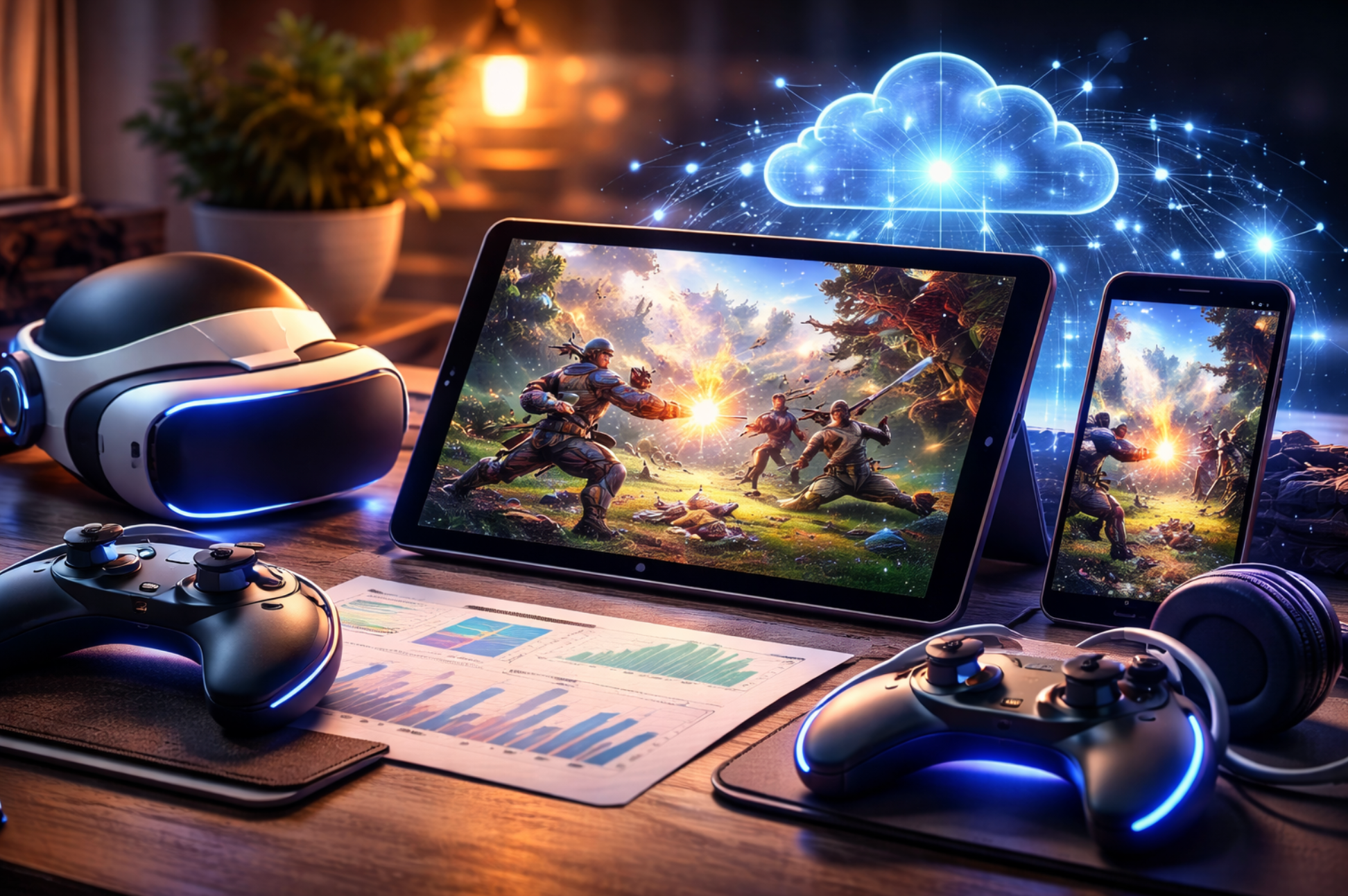
Gaming is changing again. It is not just about better graphics now. It is also about how games are made and played. VR, AI, and cloud technology are part of that change. They help make games feel more personal and easier to play on different devices.
VR Is Making Game Worlds Feel More Physical
Virtual reality changes one basic thing: distance. In a normal game, the player looks at a world through a screen. In VR, the player feels as if they are inside it. That makes movement, scale, and tension feel different. A hallway feels narrower. A giant enemy feels larger. Even simple actions can feel more immediate because the body is more involved.
This is one reason VR still matters. It offers a kind of presence that flat-screen gaming cannot fully match. Sony’s PS VR2 continues to support that idea with a growing lineup of titles, including big names like Resident Evil 4 VR Mode and other major VR releases on its official games page.
Why Presence Changes The Player Experience
VR does not improve every game in the same way. Its biggest strength is not novelty by itself. It is present. When players feel present, small design choices gain more weight. Sound matters more. Hand movement matters more. Timing matters even more when playing at Tonybet live casino.
Modern VR Projects Show Where It Works Best
Right now, VR seems strongest in a few areas:
- Horror, where closeness and tension matter
- Simulators, where physical space adds realism
- Action games built around body movement
- Puzzle games that benefit from depth and scale
This does not mean VR is limited. It means designers are getting better at choosing where it adds real value, rather than using it as decoration. Sony’s current PS VR2 catalog reflects that trend, with VR being used in genres where immersion clearly helps the design.
AI Is Changing How Games React
AI in games is no longer only about enemy pathfinding or scripted behavior. It is starting to affect dialogue, voice interaction, animation, and even how non-player characters respond in real time. NVIDIA says its ACE tools are built to enhance game characters with small AI models for speech and vision, optimized for on-device inference and low latency. That matters because players want worlds that feel alive. They want characters that do more than repeat canned lines. They want systems that react with more flexibility.
AI can help with that, not by replacing designers, but by giving them new tools to shape more responsive experiences. Ubisoft has been exploring this with projects like Ghostwriter, which helps writers draft NPC “barks,” and Teammates, a playable generative AI research project built around real-time voice commands and adaptive squad behavior.
Cloud Gaming Is Expanding Access
Cloud gaming changes a different part of the experience. Instead of asking players to own powerful local hardware, it lets them stream games across devices. Xbox’s official cloud gaming pages say players can stream on PCs, supported mobile devices, some TVs, and other hardware, while NVIDIA’s GeForce NOW offers cloud streaming across a wide range of devices as well.
Cloud Technology Is Changing What “Platform” Means
A game used to be tied much more tightly to one box in one room. Cloud gaming loosens that. A player can start on one device and continue on another. That changes convenience, but it also changes expectations. Players begin to expect access instead of installation. They begin to value flexibility as much as raw hardware power. Microsoft’s current cloud gaming setup and NVIDIA’s GeForce NOW both reflect that shift.
These Technologies Work Best Together
The future is not only VR, or only AI, or only cloud. The bigger story is how they combine. Cloud can widen access. AI can make worlds react better. VR can make those worlds feel closer and more physical. Each one solves a different problem. That combination could shape the next wave of player experience. A cloud-based game can reduce hardware barriers. AI can make its characters feel more natural. VR can make the player feel truly inside the space. When all three work well, the experience feels more welcoming and more complete. It becomes easier for players to step in and stay engaged.
The Main Challenge Is Still Design
New technology can impress people for a few minutes. Design is what keeps them there. VR needs comfort. AI needs control and purpose. Cloud needs strong streaming quality and low friction. Microsoft’s own cloud gaming support notes that performance still depends on connection quality, location, device, and bandwidth. That is why the future of gaming is not just a hardware story. It is a design story. The studios that win will be the ones that use these tools in ways that feel thoughtful, not forced. They will use them to make players feel looked after, not overwhelmed.