
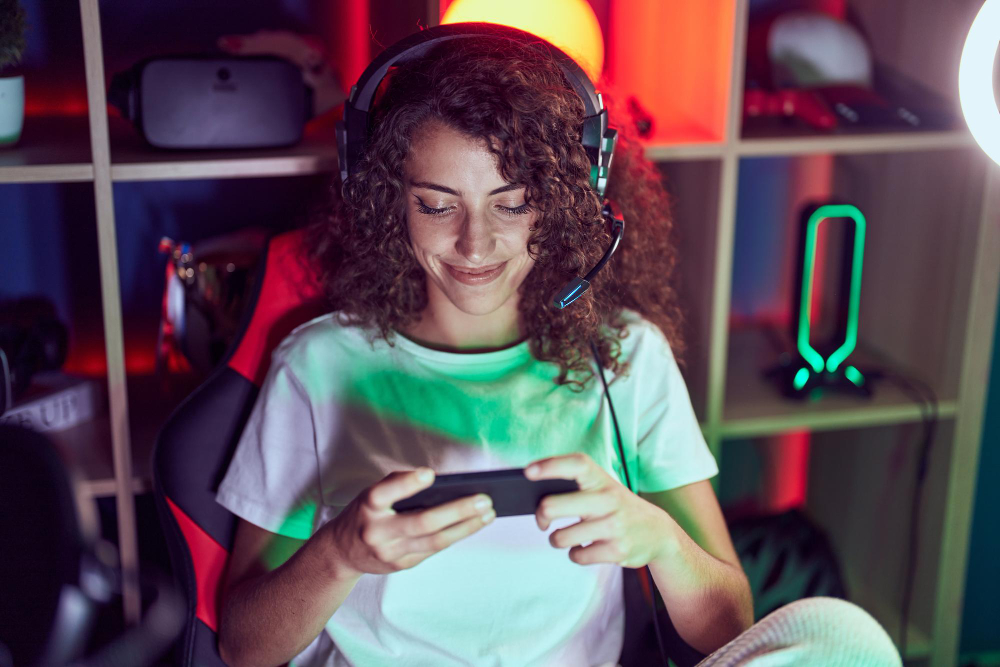
Across Kuwait, the smartphone has quietly become the default gaming console, and that shift explains why casual and competitive titles alike now reach players through a single pocket-sized screen rather than a dedicated device.
The rise of mobile gaming in Kuwait did not happen by accident. It reflects a broader pattern seen across the Gulf, where high rates of smartphone ownership and fast, widely available mobile networks made phones the easiest way to access almost any digital service, including games. For many households, a phone is the first and sometimes only computing device, so game developers design with that screen size and touch interface in mind from the start.
Mobile phones in Kuwait are not just a gaming accessory; they are the main gateway to the internet itself. A 2019 national ICT survey found that 99.2 percent of Kuwait’s population owned mobile phones, the primary devices through which residents access the internet, according to the Communication Information Technology Regulatory Authority (CITRA), a figure that sets the backdrop for Casino Al Kuwait.
That level of device penetration matters because it shapes how developers think about reach. A game built for mobile can, in theory, reach almost the entire population without requiring a console purchase or a desktop computer, which lowers the barrier to entry dramatically compared with traditional gaming hardware.
1. Why Network Speed Changed Everything
Fast, reliable mobile data turned phones from simple communication tools into genuine gaming platforms. Titles that once demanded a stable home broadband connection can now stream smoothly over a cellular network, which means a commute, a waiting room, or a coffee break becomes an opportunity to play rather than a dead moment.
Cloud-based gaming services, which render a game on distant servers and stream the video back to a phone, depend entirely on this kind of network consistency. Without widespread, dependable mobile coverage, these services would stutter or lag, so the quality of a country’s cellular infrastructure directly determines how enjoyable this style of play can be.
2. Why Session Length Matters for Mobile Design
Mobile games are typically built around shorter play sessions than their console or PC counterparts. A player might open an app for five or ten minutes between other tasks, so designers front-load satisfying moments early and structure progress in small, repeatable chunks rather than long uninterrupted levels.
This design philosophy also shapes monetization. Many mobile titles are free to download and generate revenue through optional purchases or advertising, which works well when a game has a very large potential audience reachable through a single app store rather than a specialized retail channel.
3. How Social Features Keep Players Returning
Features like leaderboards, daily challenges, and the ability to compare progress with friends give mobile games a social pull that keeps people coming back. Because a phone is always nearby, these light social loops are easier to maintain than they would be on a console that only gets switched on occasionally.
Accessibility standards also play a role in how widely a mobile game can be used, since touch interfaces and on-screen text need to work for players with different abilities. The Web Content Accessibility Guidelines published by the World Wide Web Consortium offer a widely referenced benchmark that many mobile app developers consult when designing interfaces meant to work for the broadest possible audience.
Taken together, the combination of near-universal device ownership, dependable mobile networks, and design built for short, social sessions explains why the phone has become the default way people play. As networks keep improving and app design keeps adapting to shorter attention spans, mobile is likely to remain the format that most people reach for first, simply because it is already in their hand.