
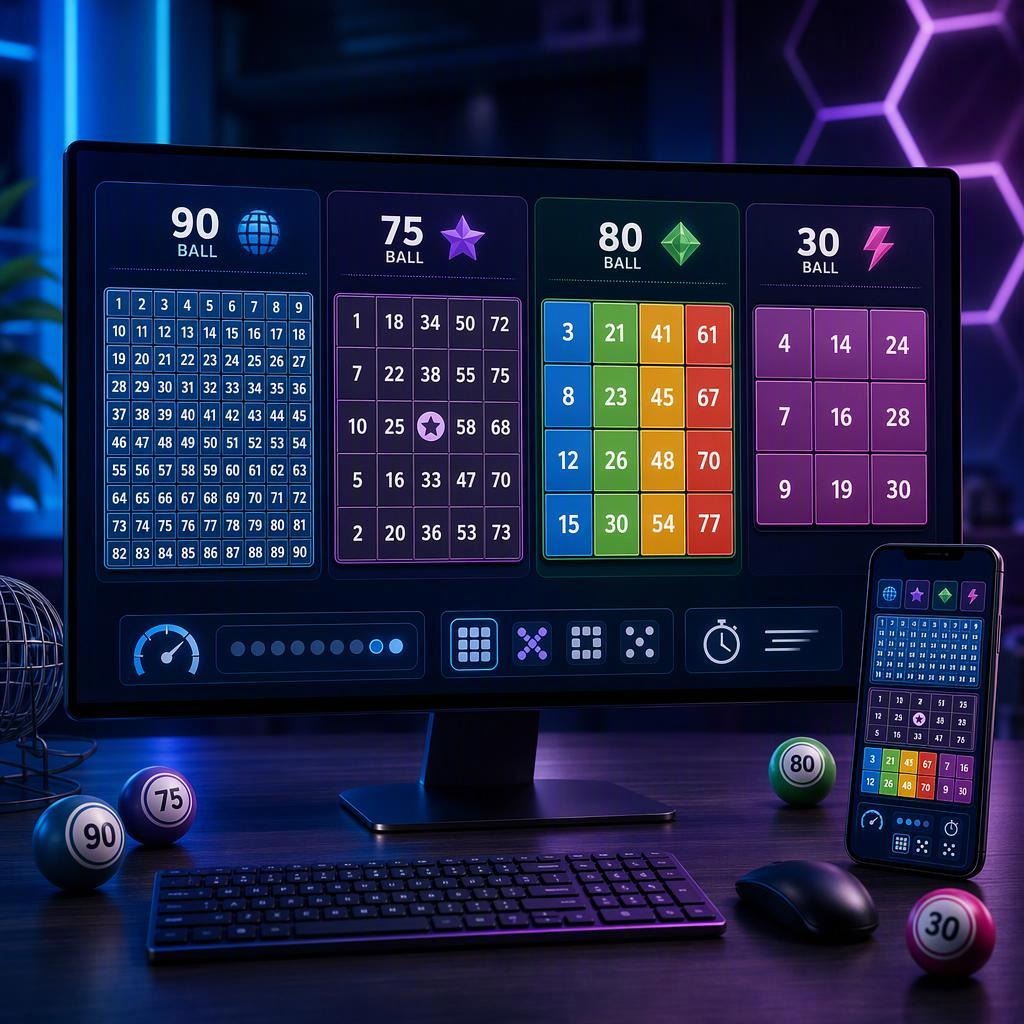
Online bingo has a lot in common with the casual games many people already enjoy. The rules are easy to pick up, rounds are neatly contained, and themes can make a familiar format feel completely different from one room to the next.
You don’t need to memorise a long list of controls or commit to a sprawling campaign. Instead, you choose a room, look over a ticket or card, follow the calls and settle into the pace of that particular game. For players who like clear objectives, readable interfaces and short sessions, that straightforward structure is a big part of bingo’s appeal.
There’s also more variety than newcomers often expect. A 90-ball room feels different from a quick-fire 30-ball game, while bingo-slot hybrids present the core idea through a more animated, feature-led style. Here’s how to tell them apart.
How bingo formats differ
If you’re used to judging games by their loops, pacing and presentation, online bingo is quite easy to read.
The central loop is simple: numbers are called, matching numbers on your card are marked, and the round ends when its stated pattern has been completed. In many online rooms, the marking can be handled automatically, which leaves you free to follow the board, chat or simply watch the round unfold.
What changes from game to game is the feel around that loop.
Pacing matters more than it first appears
A slower room gives you a little breathing space between calls. You can glance at the chat, check which patterns are in play and get used to the layout. Faster formats cut that downtime, making each round feel compact and direct.
Neither approach is inherently better. It comes down to what you enjoy:
- Measured sessions suit players who like to take in the room atmosphere.
- Rapid formats work for anyone who prefers a brief, focused round.
- Pattern-based games add a visual goal beyond filling a full card.
- Themed rooms put more emphasis on sound, animation and presentation.
The interface plays a larger role than it does in many traditional versions of the game. Good online bingo design makes the current call obvious, keeps your cards readable and shows the game’s rules before the round begins. If the display feels cluttered, even a simple game can become harder to follow than it needs to be.
Themes are presentation, not a new rulebook
A room might use a holiday, music, travel or underwater theme, but the basic bingo mechanic remains familiar. The theme changes the visual language, audio cues and community atmosphere. Think of it as a change of skin and mood rather than a totally separate genre.
That’s useful when browsing. You can choose a room because you like its style, while still checking the practical details that shape the actual session: ball count, ticket layout, call speed and the winning patterns.
The main bingo formats, explained without the fuss
Online bingo comes in several standard formats. The names usually refer to the number of balls available to be called, and that single detail affects the card design and overall rhythm.
90-ball bingo: the familiar UK format
For plenty of UK players, 90-ball bingo is the classic reference point. A ticket is arranged in three horizontal rows and nine columns, with 15 numbers in total.
The usual sequence of objectives is:
- One line, where all numbers across a single horizontal row are marked.
- Two lines, where two horizontal rows are completed.
- Full house, where every number on the ticket is marked.
Because there are several stages, a 90-ball session tends to have a gradual shape. There’s time for the room to settle in before the later goals arrive, and the three-part structure gives each game a clear arc.
It’s a good format if you enjoy having several patterns to watch for within one round and prefer a traditional bingo-card layout.
75-ball bingo: patterns take centre stage
75-ball bingo uses a five-by-five grid, often with a free centre space. The columns are commonly labelled B, I, N, G and O, and the aim is usually to complete a nominated pattern rather than simply cover every square.
That pattern could be a line, a cross, a frame, a letter shape or another design shown before the game starts.
This format can feel especially visual. You’re not only watching numbers disappear from your card, you’re tracking the outline of a target shape. If you like clear on-screen objectives and a changing selection of layouts, 75-ball bingo has plenty to offer.
80-ball bingo: a compact middle ground
80-ball bingo typically uses a four-by-four card, with each column represented by a different colour. The format sits somewhere between the larger 90-ball tickets and the pattern-led approach of 75-ball games.
Common winning conditions can include:
- A horizontal line
- A vertical line
- Two lines
- Full house
The smaller grid is easy to scan, particularly on a mobile screen, while the coloured columns help separate the card visually. It’s a sensible choice for players who want a tidy interface and a pace that doesn’t feel overly drawn out.
30-ball bingo: compact rounds
30-ball bingo, sometimes called speed bingo, uses a compact three-by-three card. With fewer numbers in circulation, rounds generally move quickly.
The usual goal is a full house, so the structure is refreshingly direct: one card, one clear target, and a short session from start to finish.
For someone fitting in a brief bit of entertainment, this format is easy to understand. It also makes a handy starting point if the larger cards initially look a little busy.
Classic bingo and bingo-slot hybrids aren’t quite the same thing
Classic online bingo is built around the card, the calls and the room. The design may be colourful or themed, but you can usually identify the familiar bingo structure at a glance.
Bingo-slot hybrids take a different presentational route. They combine bingo-card interaction with elements commonly associated with slot-style games, such as animated reels, themed scenes, feature screens and more elaborate sound design. The bingo component may still involve matching called numbers, but the surrounding experience is often more theatrical.
That doesn’t mean every hybrid plays alike. The details vary by title, so it’s worth checking the game information before you start. Look for answers to a few basic questions:
- Is there a bingo card to follow throughout the round?
- Are numbers called in a visible sequence?
- Is the main goal a line, pattern or full-card completion?
- Does the interface include separate feature sections?
- How long does a typical round appear to last?
The important point is that these hybrids are entertainment designs built around a mix of familiar mechanics. If you prefer a clean card-and-caller experience, traditional rooms may feel more natural. If audiovisual presentation is part of what draws you in, a hybrid may be more your style.
For readers comparing UK-facing bingo libraries, see Double Bubble’s online bingo games.
Finding a room that suits your pace
Online bingo is often social in a low-pressure way. Rooms may include chat, hosts, scheduled games and community prompts between rounds. You can join in, say hello or simply keep the chat closed and focus on the cards.
If you do use chat, a few simple habits help keep it pleasant:
- Keep conversation friendly and avoid spoiling the mood for others.
- Don’t share personal details in a public room.
- Read any room rules before posting.
- Remember that some players prefer quiet observation, and that’s perfectly fine.
Discovery is mostly about matching the format to your mood. Want a traditional, layered round? Try 90-ball. Fancy visual patterns? Look for 75-ball. Prefer a clean, compact card? Consider 80-ball. Only have a short window? A 30-ball room may fit better.
Many of us enjoy games more when we choose the pace deliberately rather than clicking into the first option we see.
A few player-first checks before you join
Online bingo in the UK is for adults aged 18 and over. Before creating an account or taking part, check that the operator is listed on the UK Gambling Commission’s public register.
It’s also sensible to explore the controls available in your account area. Licensed operators may provide tools such as deposit limits, time reminders, breaks and self-exclusion options. Set boundaries that suit you before playing, rather than leaving the decision until later.
If gambling stops feeling enjoyable or you’d like confidential advice, GamCare offers information and support, while GAMSTOP provides a free self-exclusion scheme for participating online gambling businesses in Great Britain.
FAQ: quick answers for new bingo players
Which bingo format is easiest for a beginner?
There isn’t one universal answer, but 30-ball is very direct because the card is small and the goal is usually full house. If you want the traditional UK structure, 90-ball is also straightforward once you understand the one-line, two-line and full-house sequence.
Do I need to mark every number myself?
Often, no. Many online bingo sites offer automatic marking, though the exact options can vary by room and operator. Check the game settings before a round begins.
What is the difference between 75-ball and 90-ball bingo?
The key differences are the card and the goal. 90-ball uses a three-row ticket and usually progresses through lines to a full house. 75-ball uses a five-by-five grid and often asks you to complete a displayed pattern.
Are bingo-slot hybrids the same as ordinary bingo?
Not exactly. They may use bingo mechanics, but they commonly add slot-style visuals, animated features and a different presentation structure. Always read the individual game rules so you know what you’re looking at.
Where can I read more game guides?
Look for DailyGame’s verified guides on casual games, multiplayer features and genre explainers. Site categories can change over time, so it’s worth using the publication’s current navigation and search tools to find the most relevant reading.
Online bingo is at its best when you treat it like any other game format: understand the rules, pick a pace you genuinely like and give yourself room to step away. Once you know how the main formats differ, choosing a room becomes much less of a guess.